Mower Engine Hunting and Surging? It's Almost Always the Carb
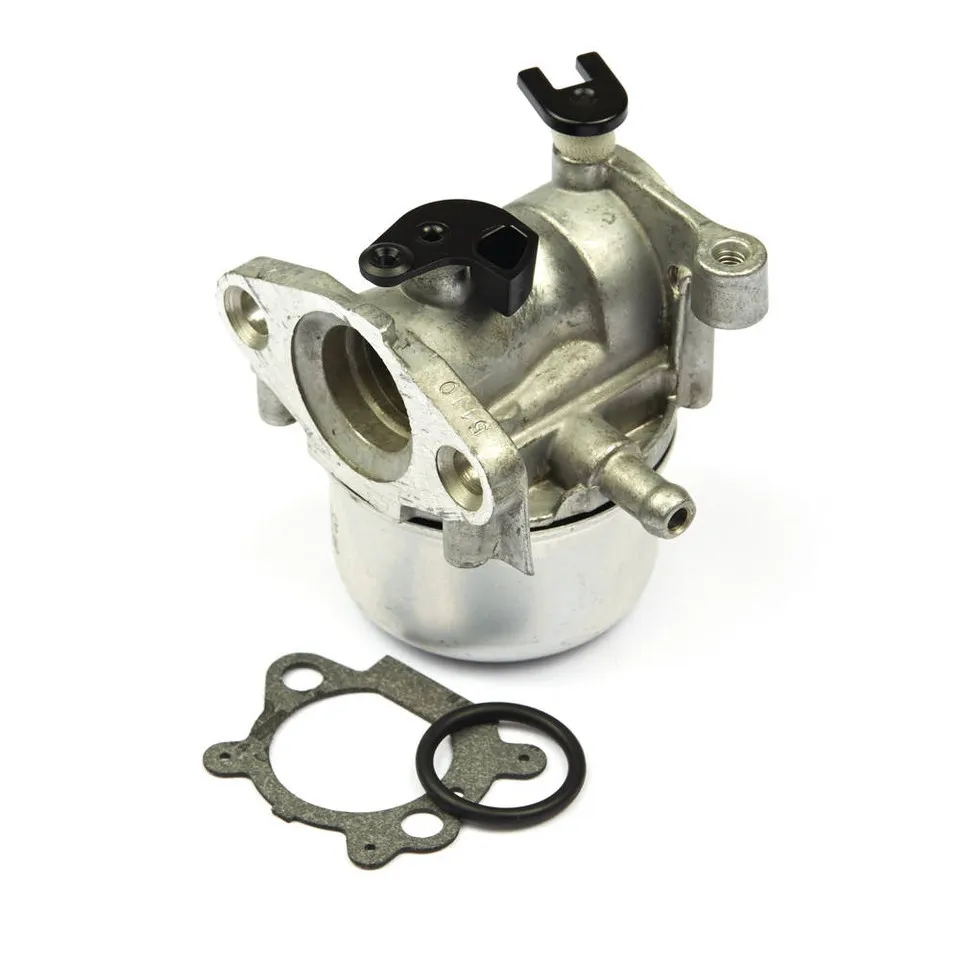
The engine revs up, then drops down, then revs up again. Over and over. It sounds like the mower can’t make up its mind what speed it wants to run at. This is called surging or hunting, and it’s one of the most common lawn mower problems.
Surging almost always comes down to fuel delivery. Either the carburetor isn’t getting enough fuel, it’s getting too much air somewhere it shouldn’t, or old gas has left deposits that restrict flow. Below, small engine mechanic Marcus Chen explains what causes surging and walks through the fixes from simplest to most involved.
What Causes Lawn Mower Surging
To understand surging, you need to know how the governor system works.
Every lawn mower has a governor—a mechanical device that maintains constant engine speed. When the engine slows down (like when you hit thick grass), the governor opens the throttle to add more fuel. When the engine speeds up, the governor closes the throttle to reduce fuel.
Surging happens when the engine can’t maintain a steady state. Here’s the cycle:
- Engine runs lean (not enough fuel for the air it’s getting)
- RPM drops because there’s not enough power
- Governor senses the drop and opens the throttle
- Carburetor dumps in extra fuel
- RPM spikes from the sudden fuel burst
- Governor senses the spike and closes the throttle
- Engine goes lean again
- Cycle repeats
The fix is identifying why the engine runs lean in the first place. Usually it’s a clogged carburetor, dirty air filter, or air leak.
Lawn Mower Surging Mistakes to Avoid
Don’t adjust the governor first. Most people assume surging is a governor problem because that’s the component that’s visibly moving. But the governor is almost never the root cause—it’s just responding to an underlying fuel or air issue.
Don’t keep running the mower. Surging means the engine cycles between lean and rich repeatedly. Running lean (even briefly) can cause overheating and accelerated wear. Fix the problem before mowing.
Don’t ignore old fuel. If the mower sat for more than a couple months, the fuel has probably gone bad. Old gas causes surging even if it looks and smells normal.
Don’t spray starting fluid and call it fixed. If the surging stops when you spray starting fluid or choke the engine slightly, you’ve confirmed the problem is fuel-related. But you still need to actually fix it.
How to Diagnose Lawn Mower Surging
Before tearing into the carburetor, try this test to narrow down the cause.
Start the mower and let it warm up. Once it’s surging, move the choke lever slightly toward the closed (choke) position—just enough to restrict airflow a little.
If the surging stops or improves: The engine is running lean. This points to a carburetor problem (clogged jets or passages) or a fuel delivery issue (clogged filter, bad fuel, restricted line). See our carburetor cleaning guide for the fix.
If the surging continues unchanged: The problem is likely an air leak that’s introducing unmetered air, or less commonly, a governor issue.
If the engine bogs down and wants to die: The mixture isn’t lean—you’re dealing with something else, possibly ignition-related.
Fix Lawn Mower Surging: Replace Air Filter
This is the easiest and cheapest fix, so start here.
A dirty air filter restricts airflow to the carburetor. The engine compensates by running a richer mixture, but the restriction makes airflow inconsistent, which can trigger surging. A severely clogged filter also makes the engine work harder, which accelerates other problems.
How to Replace the Air Filter
- Locate the air filter housing (usually a plastic cover on the side of the engine with clips or screws)
- Remove the cover and pull out the filter element
- Inspect the filter—if it’s gray, brown, or caked with debris, it needs replacement
- Check for a foam pre-filter behind the main filter (some models have both)
- Install the new filter and reassemble
Air filter cost: $8 to $15 depending on brand
If the filter was dirty and the surging stops after replacement, you’re done. If it continues, move on to checking the fuel.
Fix Lawn Mower Surging: Check Fuel System
Old gasoline is the silent killer of small engines. Gas starts degrading after about 30 days. After 90 days, it’s definitely causing problems even if it still looks okay.
What Old Fuel Does
The lighter compounds in gasoline evaporate over time, leaving behind a gummy varnish. This varnish coats the inside of the carburetor and partially blocks the tiny jets and passages. The engine can run, but fuel delivery is inconsistent—exactly the condition that causes surging.
How to Fix It
- Drain all the old fuel from the tank into a container for proper disposal
- Locate the carburetor bowl drain screw (at the very bottom of the carb) and open it to drain the bowl
- Check the fuel filter (inline on the fuel line) and replace it if it looks discolored or restricted
- Fill with fresh gasoline—premium if available since it contains less ethanol
- Add fuel stabilizer if you won’t use the mower regularly
Fuel filter cost: $5 to $10
If fresh fuel solves the surging, make a note to use fuel stabilizer going forward. If the surging continues, the carburetor needs cleaning.
Fix Lawn Mower Surging: Clean Carburetor
This is where most surging problems get solved. The carburetor has tiny passages and jets that meter fuel precisely. When these get partially clogged with varnish, the engine can’t get consistent fuel delivery.
What You’ll Need
- Carburetor cleaner spray ($8 to $12)
- Basic screwdriver set
- Pliers for fuel line clamps
- Thin wire or carburetor jet cleaning tool
- New carburetor gaskets (recommended, $5 to $15)
- Clean rags
- Small container for parts
Step-by-Step Carburetor Cleaning
Step 1: Remove the air filter and housing. Set them aside.
Step 2: Disconnect the fuel line. Have a rag ready—fuel will drip out. Close the fuel shutoff valve first if your mower has one.
Step 3: Disconnect the throttle and choke linkages. Take a photo first so you remember how they connect. These are usually just hooks or clips that pop off.
Step 4: Remove the carburetor. Most carburetors are held on by two bolts or nuts. Remove them and pull the carburetor off the intake manifold.
Step 5: Remove the float bowl. This is the small reservoir at the bottom of the carburetor, usually held by one screw or bolt. Fuel will spill out.
Step 6: Inspect inside. Look for varnish deposits, debris, or white/green corrosion. All of these restrict fuel flow.
Step 7: Remove and clean the jets. The main jet is usually a brass fitting in the center of the carburetor body. Unscrew it carefully. The idle jet is smaller and located near the throttle plate. Spray through all holes with carburetor cleaner and use thin wire to clear any blockages.
Step 8: Spray all passages. Every hole in the carburetor body is a passage. Spray carburetor cleaner into each one until it flows freely out another hole. Pay special attention to the small holes around the throttle plate area.
Step 9: Check the needle and seat. The needle valve controls fuel flow into the float bowl. If it’s stuck or worn, fuel delivery will be inconsistent. Clean it and make sure it moves freely.
Step 10: Reassemble with new gaskets. Old gaskets can leak air and cause the same surging you’re trying to fix. New gaskets cost a few dollars and prevent headaches.
Step 11: Reinstall and test. Connect everything in reverse order. Start the mower and let it warm up. The surging should be gone.
When to Replace Instead of Clean
If you’ve cleaned the carburetor thoroughly and the surging continues, or if this is your second or third cleaning attempt, consider replacing the carburetor entirely. Aftermarket carburetors run $25 to $50 and come ready to install. Sometimes it’s not worth spending three hours cleaning a $30 part.
Fix Lawn Mower Surging: Find Air Leaks
An air leak allows unmetered air into the engine—air that bypasses the carburetor and doesn’t bring fuel with it. This makes the engine run lean and triggers the surging cycle.
Common Air Leak Locations
- Carburetor mounting gasket — Between the carburetor and intake manifold
- Intake manifold gasket — Between the intake and the engine block
- Cracked intake manifold — Plastic manifolds can crack over time
- Carburetor body — Cracks in the carburetor housing itself
How to Find Air Leaks
With the engine running and surging, spray a small amount of carburetor cleaner around the gasket areas. If the RPM changes (usually speeds up) when you spray a particular spot, you’ve found your leak.
Warning: Carburetor cleaner is flammable. Do this outdoors, away from ignition sources, and spray in short bursts rather than soaking the area.
How to Fix Air Leaks
Most air leaks are gasket failures. Remove the carburetor, scrape off the old gasket material and install new gaskets. Make sure all mounting bolts are tight but not overtightened (which can crack plastic manifolds).
Gasket set cost: $5 to $15
Fix Lawn Mower Surging: Adjust Governor
Governor problems are less common than carburetor issues, but they can cause identical symptoms. Only adjust the governor after you’ve ruled out fuel and air leak problems.
Signs of Governor Problems
- Surging continues after carburetor cleaning and air leak check
- Linkage looks loose or disconnected
- Spring is stretched, broken, or in the wrong hole
- Engine speed is wrong (too fast or too slow) even when not surging
Basic Governor Adjustment
- Locate the governor arm on the engine (connects to the throttle linkage)
- Loosen the clamp bolt that holds the arm to the governor shaft
- Move the throttle to the wide-open position
- Rotate the governor shaft in the same direction (usually counterclockwise, but check your engine manual)
- Tighten the clamp bolt while holding everything in position
- Start the engine and test
If adjusting the governor doesn’t help, the internal governor mechanism may be worn. This requires more extensive disassembly and is often not worth repairing on a residential mower.
Lawn Mower Surging Repair Costs
| Fix | Part Cost | Difficulty |
|---|---|---|
| Air filter | $8–$15 | Easy |
| Fuel filter | $5–$10 | Easy |
| Carburetor cleaning | $10–$20 (cleaner + gaskets) | Medium |
| Carburetor replacement | $25–$50 | Medium |
| Gasket set | $5–$15 | Easy–Medium |
| Governor spring | $5–$10 | Medium |
Most surging problems cost under $25 to fix yourself. The expensive scenario is needing a new carburetor, and even that’s only $50 or so.
Tools for Lawn Mower Surging Repair
Tools:
- Screwdriver set
- Pliers
- Socket set (for carburetor mounting bolts)
- Thin wire or jet cleaning tool
- Compressed air (optional but helpful)
Materials:
- Carburetor cleaner spray
- New air filter
- New fuel filter
- Carburetor gasket set
- Fresh gasoline
- Fuel stabilizer
For a full walkthrough on seasonal prep, see our small engine storage guide.
Lawn Mower Surging Fix Summary
Lawn mower surging is almost always a fuel delivery problem. Start with the free test—move the choke slightly and see if surging improves. Then work through the fixes in order: replace the air filter, drain old fuel and add fresh, clean the carburetor and check for air leaks. Governor adjustment is rarely needed.
The most common fix is carburetor cleaning. Old fuel leaves deposits that restrict the jets, and the engine surges as it hunts for the right mixture. Thirty minutes with a can of carburetor cleaner solves the problem in most cases.