Common Briggs Engine Issues and How to Fix Them Yourself
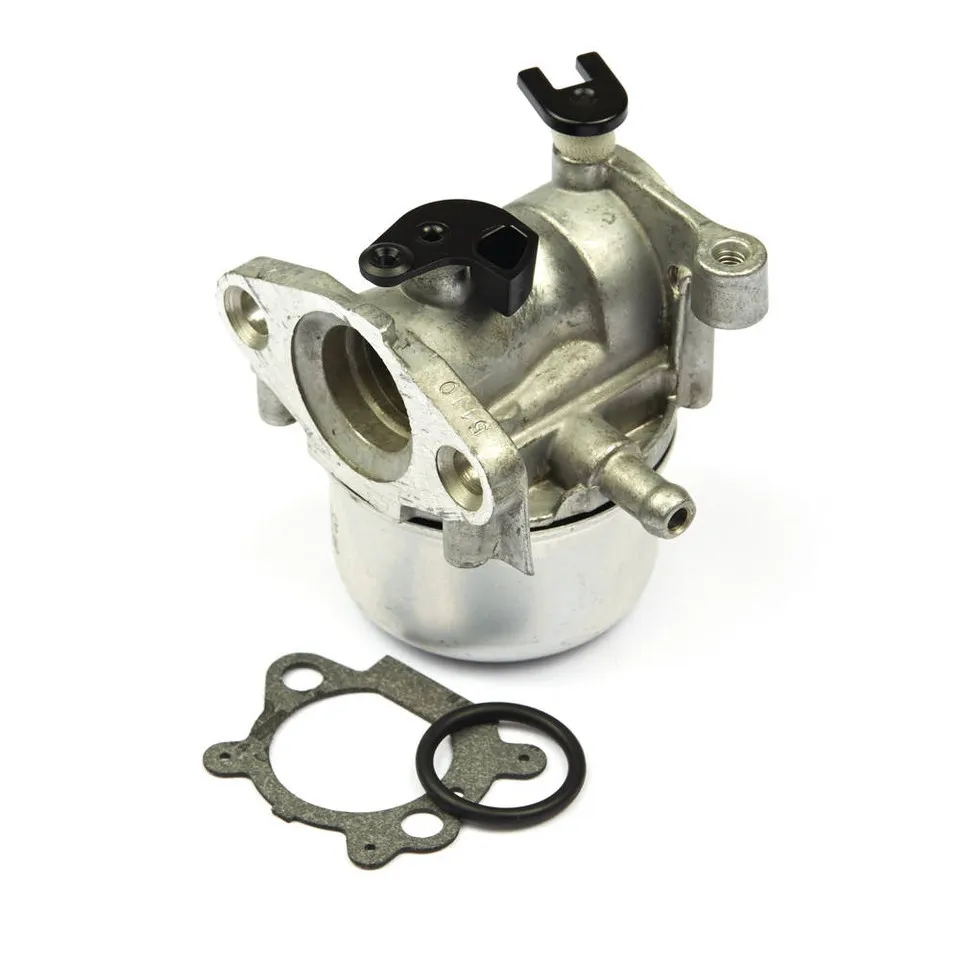
Briggs & Stratton engine problems are usually caused by old fuel (80% of cases), dirty air filters or worn spark plugs. A Briggs engine that won’t start needs fresh gas, a new spark plug ($4-8) and possibly carburetor cleaning ($15-40 DIY or $75-150 at a shop). Surging indicates a partially clogged carburetor or vacuum leak at the gasket. Blue smoke means burning oil (check level first—overfilling causes this); black smoke means a stuck choke or clogged air filter.
Briggs engines power more lawn mowers than any other brand. The 450E, 675EXi and Intek share the same basic design. Fix fuel, spark and air issues and you’ve solved 90% of problems.
Below, small engine mechanic Marcus Chen covers the most common Briggs & Stratton issues and walks through the fixes for each one.
How to Identify Your Briggs & Stratton Engine
Before troubleshooting, it helps to know what engine you’re working with. Briggs uses different designs for different power levels.
Push Mower Engines
| Series | Engine Size | What It Powers |
|---|---|---|
| 450E / 500E | 125-140cc | Budget push mowers |
| 550EX / 625EX | 140-150cc | Mid-range push and self-propelled |
| 675EXi / 725EXi | 163cc | Premium push and self-propelled |
| 850EX / 875EXi | 190cc | High-end residential mowers |
The “EXi” models have electronic fuel injection and don’t use carburetors—they have different problems (usually sensor-related) than the standard carbureted engines.
Riding Mower Engines
| Series | Configuration | Horsepower |
|---|---|---|
| Intek | Single cylinder | 15-20 HP |
| Professional | Single cylinder | 17-21 HP |
| Vanguard | V-twin | 18-37 HP |
| Commercial Turf | V-twin | 20-35 HP |
Finding Your Model Number
The model number tells you exactly what engine you have. Look for a sticker or stamped numbers on the metal blower housing (the shroud that covers the flywheel).
The format is Model-Type-Code. For example: 09P702-0145-F1
- First part (09P) = engine model
- Middle (702) = engine type/configuration
- Last part = manufacturing date code
You’ll need this number to order correct parts.
Briggs & Stratton Won’t Start Fixes
This is the most common complaint about Briggs engines. Here’s how to diagnose it systematically.
Check Fuel First
Old fuel causes most starting failures. Gasoline starts going bad after 30 days. After 90 days, it’s definitely causing problems—even if it looks and smells fine.
What to do:
- Drain all old fuel from the tank
- Drain the carburetor bowl (there’s a bolt or screw at the bottom)
- Add fresh gasoline
- Try starting
If fresh fuel fixes it, add fuel stabilizer to prevent the problem from happening again. See our small engine storage guide for proper winterization.
Check for Spark
No spark means no combustion. Here’s how to test:
- Remove the spark plug using a 13/16” or 3/4” socket
- Reconnect the spark plug wire to the plug
- Hold the plug threads against bare metal on the engine block
- Pull the starter cord and watch the electrode gap
Good spark: Bright blue, snaps with each pull Bad spark: Weak orange/yellow, inconsistent, or nothing
If there’s no spark, replace the spark plug first ($4 to $8). Our spark plug replacement guide covers the process. If a new plug doesn’t help, check the kill switch by disconnecting its wire from the ignition coil and testing again. Use a multimeter to test continuity. Still no spark? The ignition coil has failed.
Check the Carburetor
If you have fresh fuel and good spark but the engine still won’t start, the carburetor is probably clogged. Old fuel leaves varnish deposits that block the tiny jets and passages.
Signs of carburetor problems:
- Engine cranks but won’t fire at all
- Starts momentarily then dies
- Only runs with choke on
The fix is cleaning or replacing the carburetor. More on this below.
Low Oil Shutoff
Most Briggs engines have a sensor that prevents starting when oil is low. If your engine suddenly stopped and won’t restart:
- Check the oil level immediately
- Add oil if it’s below the ADD mark
- Wait 30 seconds for the sensor to reset
- Try starting again
Briggs & Stratton Engine Surging Fixes
The engine revs high, then low, then high again—over and over. This is called surging or hunting.
Why It Happens
Surging means the engine can’t maintain a steady fuel-air mixture. The governor keeps trying to compensate, which creates the rhythmic revving pattern. The three most common causes:
Dirty air filter: A clogged filter restricts airflow, which throws off the mixture. Replace the filter first—it’s cheap and easy.
Partially clogged carburetor: Varnish deposits in the jets restrict fuel flow. The engine runs lean, RPM drops, the governor opens the throttle, fuel bursts through, RPM spikes, governor closes throttle and the cycle repeats.
Air leak at carburetor: A cracked gasket or loose mounting bolts let unmetered air into the engine. This makes the engine run lean and triggers the surge cycle.
How to Fix It
- Replace the air filter
- Drain old fuel and add fresh
- Clean the carburetor (or replace it if cleaning doesn’t help)
- Check the carburetor mounting bolts are tight and gaskets aren’t damaged
See our full guide on fixing a surging lawn mower for step-by-step instructions.
Briggs & Stratton Engine Smoking Fixes
Smoke color tells you what’s wrong.
Briggs Engine Blue or White Smoke
The engine is burning oil.
Check oil level first. Overfilling is the most common cause of smoking—the engine burns off the excess. The oil should be between the ADD and FULL marks on the dipstick, not above FULL.
Other causes:
- Worn piston rings (engine has high hours)
- Worn valve seals
- Mower tipped the wrong direction during maintenance
- Operating on steep slopes
If the oil level is correct and smoking continues, internal engine wear is likely. For a push mower, it’s often not worth repairing—a new mower costs less than an engine rebuild.
Briggs Engine Black Smoke
The engine is running rich—too much fuel for the amount of air.
Causes:
- Choke stuck closed (most common)
- Air filter severely clogged
- Carburetor float stuck open, dumping fuel
- Wrong carburetor jet installed
Check that the choke opens fully when the engine warms up. Replace the air filter. If those don’t fix it, the carburetor needs attention.
Briggs & Stratton Engine Loses Power
The mower runs but bogs down when you hit thicker grass. It lacks the power it used to have.
Easy Fixes First
Air filter: A dirty filter is the most common cause of power loss. It restricts airflow, starving the engine. Replace it.
Spark plug: A fouled or worn plug causes weak combustion. Replace it if you can’t remember when you last did.
Old fuel: Degraded fuel doesn’t burn as efficiently. Drain and replace with fresh gas.
If Those Don’t Help
Carburetor issues: Partial blockages restrict fuel flow under load. The engine runs fine at idle but can’t deliver enough fuel when you need power. Clean the carburetor.
Low compression: Worn piston rings or valve problems reduce the engine’s ability to compress the fuel-air mixture. A compression test should read 60-90 PSI. Below 60 indicates internal wear that requires professional repair.
Exhaust restriction: A clogged muffler or spark arrestor restricts exhaust flow and reduces power. Check that exhaust flows freely.
Briggs & Stratton Carburetor Problems
The carburetor is the source of most Briggs engine problems. It’s a simple device with tiny passages that clog easily.
Common Briggs Carburetors
| Engine Series | Carburetor Part Number |
|---|---|
| 450E - 550EX | 799866 (plastic body) |
| 625EX - 725EXi | 799866 or 799871 |
| 850EX - 875EXi | 799871 (metal body) |
| Intek single | 591736 (Nikki style) |
| Intek V-twin | 791858 (Nikki style) |
Cleaning vs. Replacing
Clean the carburetor when:
- Engine ran fine before storage
- First time having carburetor problems
- Carburetor body is in good condition
Replace the carburetor when:
- Cleaning doesn’t help
- Throttle shaft is worn (wobbles = air leak)
- Body is cracked or damaged
- You’ve cleaned it multiple times already
Cost comparison:
- Rebuild kit: $8 to $15
- Aftermarket carburetor: $15 to $30
- OEM Briggs carburetor: $35 to $60
Aftermarket carburetors work fine for most residential use. For a $20 part, it’s often easier to replace than to spend two hours cleaning.
How to Clean a Briggs Carburetor
- Remove the air filter housing
- Shut off the fuel valve or pinch the fuel line
- Disconnect the throttle and choke linkages (take a photo first)
- Remove the two mounting bolts and pull off the carburetor
- Remove the float bowl (single bolt at bottom)
- Remove the main jet (brass fitting in center)
- Spray all passages with carburetor cleaner
- Use thin wire to clear the jets
- Reassemble with new gaskets
- Reinstall and adjust the choke linkage
See our detailed Briggs 799866 carburetor guide for more information.
Briggs & Stratton Ignition Problems
No Spark Troubleshooting
If you tested for spark and got nothing:
-
Try a new spark plug. Old plugs fail. This is the cheapest fix to try first.
-
Disconnect the kill switch wire. The wire runs from the ignition coil to the kill switch. If the switch is shorted, it grounds the ignition and prevents spark. Disconnect it at the coil and test again. If you get spark now, the switch is bad.
-
Check the ignition coil air gap. The coil mounts near the flywheel. The gap between the coil legs and the flywheel magnets should be 0.010” to 0.014”. Too wide and spark weakens.
-
Inspect the flywheel key. If the mower hit something hard, the soft aluminum key between the flywheel and crankshaft may have sheared. This throws off timing and prevents starting. You’ll need to remove the flywheel to check.
-
Replace the ignition coil. If everything else checks out, the coil itself has failed. They fail from heat cycling over time. Replacement coils run $15 to $40.
Weak Spark
Orange or yellow spark instead of bright blue means weak ignition. The engine might start but run poorly.
Causes:
- Worn spark plug (replace it)
- Failing ignition coil
- Air gap too wide
- Poor ground connection between coil and engine
Briggs & Stratton Oil and Maintenance Tips
Oil Recommendations
| Temperature Range | Oil Type |
|---|---|
| Above 40°F | SAE 30 |
| 0°F to 100°F | 10W-30 |
| Below 40°F | 5W-30 synthetic |
Oil capacity:
- Push mower engines: 18-20 oz (about 0.5 quart)
- Riding mower engines: 48-64 oz (1.5-2 quarts)
Change interval: Every 25-50 hours of use or at least once per season. See our oil guide for viscosity recommendations.
Maintenance Schedule
Before each use:
- Check oil level
- Quick air filter inspection
- Make sure nothing is loose
Every 25 hours (or monthly during mowing season):
- Change engine oil
- Clean or replace air filter
- Clean grass and debris from cooling fins
Every 50 hours (or annually):
- Replace spark plug
- Check valve clearance on OHV engines (should be 0.004” to 0.006”)
- Clean fuel system
End of season:
- Run the fuel system dry, OR add stabilizer and run for 5 minutes
- Change oil while engine is still warm
- Clean entire engine
- Store in a dry location
Briggs & Stratton Engine Specs
| Specification | Value |
|---|---|
| Oil type | SAE 30 or 10W-30 |
| Oil capacity (push mower) | 18-20 oz |
| Oil capacity (riding mower) | 48-64 oz |
| Spark plug | NGK BPR6ES or Champion RJ19LM |
| Spark plug gap | 0.030” |
| Ignition coil air gap | 0.010” - 0.014” |
| Valve clearance (OHV) | 0.004” - 0.006” intake/exhaust |
| Compression (healthy engine) | 60-90 PSI |
Briggs & Stratton Engine Problems Summary
Briggs & Stratton engines are workhorses. They’re simple, reliable, and easy to fix when problems occur. Most issues trace back to three things: old fuel clogging the carburetor, dirty air filters restricting airflow, or worn spark plugs weakening ignition.
Keep fresh fuel in the tank (or use stabilizer), change the oil regularly, replace the air filter when it’s dirty and swap the spark plug once a year. Do those four things and your Briggs engine will run for decades.
When carburetor problems do occur, cleaning usually works. If cleaning doesn’t help, aftermarket replacement carburetors cost $20 to $30 and take 15 minutes to install. Don’t overthink it.