Self-Propelled Mower Won't Move: Cable, Belt and Transmission Fixes
Your lawn mower engine runs fine, but the wheels won’t turn. You squeeze the bail lever and nothing happens. The mower just sits there while you push it around like a regular mower.
Before you start shopping for a new transmission, try the free fix first: adjust the drive cable. That solves the problem about 80% of the time. The cable stretches with use, and when it gets too loose, the transmission never fully engages. Tightening it takes two minutes and costs nothing.
Small engine mechanic Marcus Chen covers every cause of self-propelled failure below, starting with the easy fixes and working toward the more involved repairs.
Understanding How Self-Propelled Lawn Mowers Function
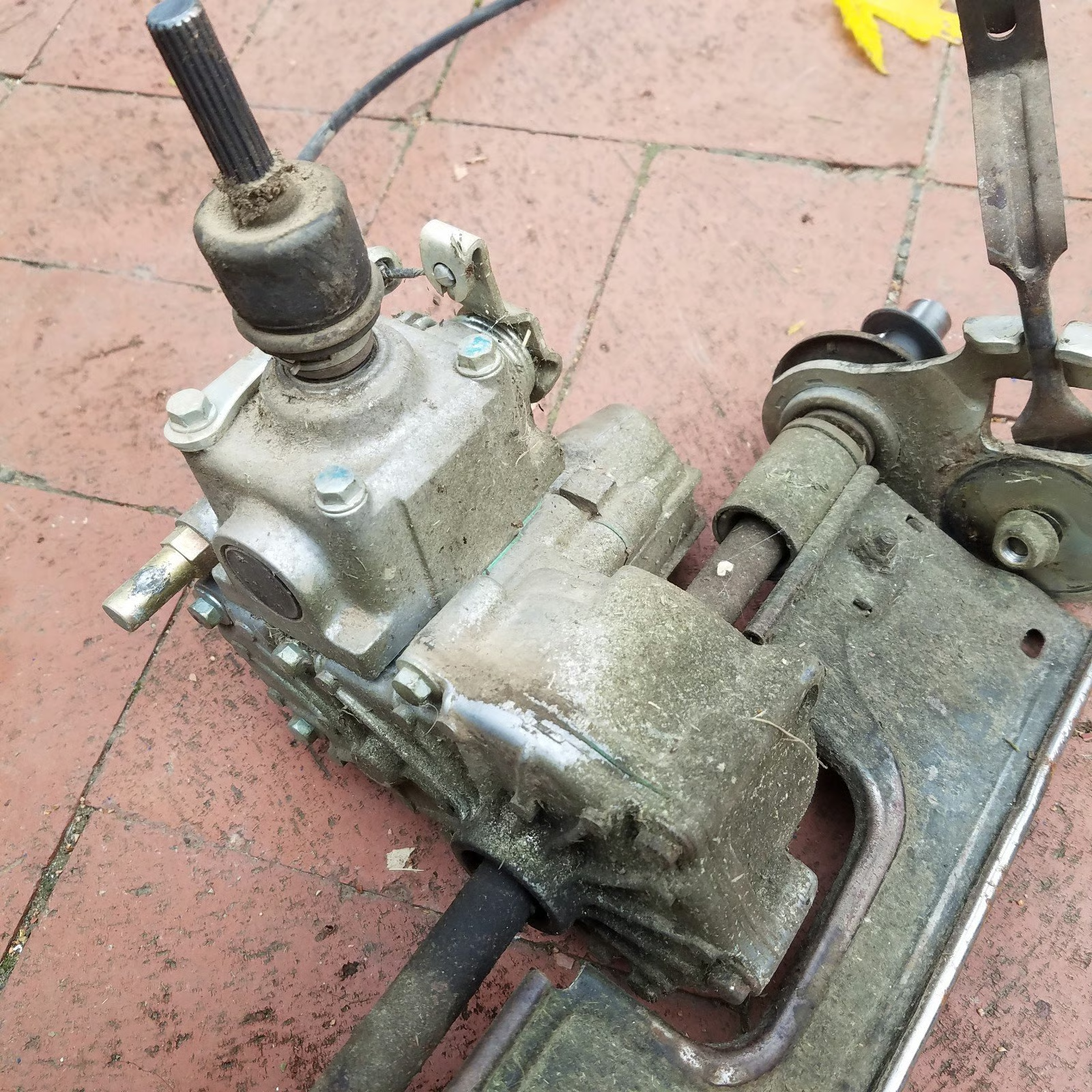
A self-propelled mower uses engine power to turn the wheels through a simple system: a belt connects the engine to a transmission, and the transmission drives the wheels through an axle or internal gears. When you squeeze the bail lever on the handle, it pulls a cable that engages the transmission.
Every component in this chain can fail, but some fail more often than others:
- Drive cable — Most common failure point. Stretches over time and loses tension.
- Drive belt — Wears out, cracks, or breaks after several seasons.
- Transmission — Less common but expensive when it happens.
- Wheel gears — Internal gears in rear wheels can strip or wear out.
Start your diagnosis with the cable and work your way down this list.
Common Mistakes in Self-Propelled Mower Repairs
Don’t assume the transmission is bad. Transmission replacement costs $60 to $150 for parts alone. Cable adjustment is free. Always rule out the cheap fixes first.
Don’t ignore a slipping belt. If you hear squealing when the drive engages, the belt is slipping. Running it like this wears out the belt faster and can damage the pulleys.
Don’t force the mower. If the self-propel isn’t working right, don’t muscle through thick grass hoping it’ll engage. You’re just putting extra stress on components that are already struggling.
Don’t overlook debris. Grass clippings and dirt packed around the transmission pulley or inside the wheel hubs can prevent proper engagement.
Adjusting the Drive Cable on Your Self-Propelled Mower
This is the fix that works most of the time. Here’s how to do it.
Step 1: Locate the Adjustment Barrel
The cable runs from the bail lever on the handle down to the transmission at the rear of the mower. Look for a threaded barrel adjuster where the cable housing meets the transmission bracket. Some mowers have the adjuster at the handle end instead.
Step 2: Test Current Engagement
Squeeze the bail lever slowly and note when the drive engages. If you have to pull the lever all the way to the handle before anything happens, the cable is too loose. If the drive engages the instant you touch the lever, it’s too tight.
Step 3: Adjust the Tension
Turn the barrel adjuster clockwise to tighten the cable. Most adjusters have a locknut that you’ll need to loosen first. Make small adjustments—a quarter turn at a time—and test after each one.
Step 4: Check Your Work
The drive should engage smoothly when the bail lever is about halfway to the handle. When you release the lever, there should be a small amount of slack in the cable. If you can’t get proper adjustment no matter how much you turn the barrel, the cable is stretched beyond its adjustment range and needs replacement.
When Cable Adjustment Doesn’t Help
If the cable is tight but the drive still won’t engage, move on to checking the belt. If the cable feels loose even after maxing out the adjuster, replace the cable. New cables run $15 to $30 depending on brand, and installation takes about 20 minutes.
Replacing the Drive Belt on Your Self-Propelled Mower
The drive belt connects the engine crankshaft pulley to the transmission input pulley. Over time, belts stretch, crack, glaze over, or break entirely.
Signs Your Belt Needs Replacement
- Squealing noise when the drive engages
- Drive slips under load (works on flat ground but not on hills)
- Visible cracks, fraying, or shiny glazed spots on the belt
- Cable is tight but transmission pulley won’t spin
Accessing the Belt
On most walk-behind mowers, you can see the belt by tipping the mower back (air filter side up) and looking underneath. The belt routes around the engine pulley and the transmission pulley. Some mowers have a belt cover that needs to come off first.
Replacing the Belt
- Disconnect the spark plug wire for safety
- Tip the mower back with the air filter facing up
- Remove the blade if it’s blocking access (14mm or 15mm socket on most models)
- Note exactly how the belt routes around the pulleys and any guides
- Release the belt tensioner—usually a spring-loaded pulley you push aside
- Slip the old belt off the pulleys
- Route the new belt exactly like the old one
- Release the tensioner so it takes up slack
- Spin the pulleys by hand to make sure the belt tracks properly
- Reinstall the blade and test
Belt costs: $15 to $30 depending on brand. Common part numbers:
| Brand | Models | Part Number |
|---|---|---|
| Toro Recycler | Most models | 117-1018 |
| Honda HRX/HRR | Self-propelled | 22431-VL0-B01 |
| Craftsman | M-series | 954-04259 |
| Husqvarna | LC series | 532197253 |
Issues with Self-Propelled Mower Transmission
If the cable is tight and the belt is good but the mower still won’t propel, the transmission has probably failed internally.
How to Tell It’s the Transmission
- Transmission input pulley spins but the wheels don’t turn
- Grinding or clicking noise coming from the transmission housing
- Drive works intermittently then stops completely
- Visible damage to transmission housing or output shaft
What Happens Inside a Transmission
Most self-propelled mowers use a variable-speed transmission with internal gears and clutch plates. When the cable pulls the engagement lever, it presses these components together to transfer power. Over time, the clutch surfaces wear out and the gears can strip. Unfortunately, these transmissions aren’t designed to be rebuilt—when they fail, you replace the whole unit.
Replacing a Transmission
- Remove the belt from the transmission pulley
- Disconnect the drive cable from the engagement lever
- Remove the bolts holding the transmission to the mower deck (usually two to four bolts)
- Note the position of the axle and any alignment marks
- Slide the transmission out—you may need to remove the rear wheels first
- Transfer the input pulley to the new transmission if it doesn’t come with one
- Install the new transmission in reverse order
- Reconnect the cable and adjust tension
- Test drive engagement before mowing
Transmission costs: $60 to $150 for the part. Shop labor adds another $75 to $150.
Wheel and Gear Troubles in Self-Propelled Mowers
Some self-propelled mowers—especially Toro, Craftsman and Husqvarna models—have drive gears built into the rear wheels. The transmission spins the axle, and gears inside the wheel hub transfer that rotation to the wheel itself.
Signs of Worn Wheel Gears
- Clicking or ratcheting sound when driving
- One wheel drives but the other doesn’t
- Wheel spins freely on the axle when it shouldn’t
- Drive works in one direction but not the other (rare)
Fixing Wheel Gear Problems
The internal gears aren’t sold separately on most mowers. You replace the entire wheel assembly. Pull the wheel off the axle (usually held by a C-clip or E-ring) and compare it to a replacement to make sure you’re getting the right part.
Wheel assembly costs: $30 to $60 each depending on brand.
Debris in the Drive System
Before assuming anything is broken, clean out the drive components. Grass clippings, dirt, and debris can pack into the transmission pulley groove, wheel hubs, and around the axle. This buildup prevents proper engagement and can make a working drive system act like a broken one.
Use a stiff brush or compressed air to clean:
- Inside the rear wheel hubs
- Around the transmission pulley and belt
- The axle where it passes through the wheels
- Any belt guides or idler pulleys
Comparing Repair Costs for Lawn Mowers
| Problem | DIY Cost | Shop Cost |
|---|---|---|
| Cable adjustment | Free | $25–$50 |
| Cable replacement | $15–$30 | $50–$100 |
| Belt replacement | $15–$30 | $75–$125 |
| Transmission replacement | $60–$150 | $150–$300 |
| Wheel assembly (each) | $30–$60 | $60–$100 |
Tips for Preventing Drive Issues in Self-Propelled Mowers
Keep It Clean
Grass buildup is the enemy of drive systems. After each use, tip the mower back and scrape off any grass packed around the pulleys and belt. Clean inside the wheel hubs at least once a season.
Lubricate the Cable
Once a year, disconnect the cable at the transmission end and drip some light oil into the housing. Work the cable back and forth to distribute the oil. This prevents binding and extends cable life.
Adjust Proactively
Check cable tension at the start of each mowing season. It’s easier to make small adjustments over time than to deal with a drive system that’s been running out of spec for months.
Don’t Abuse the System
Self-propelled mowers are designed for normal grass, not brush clearing. Forcing the mower through overgrown areas puts extra stress on the belt, transmission and wheel gears. If the grass is that thick, raise the deck height and make two passes.
Essential Tools for Self-Propelled Mower Repairs
Tools:
- Wrench or pliers for cable adjuster locknut
- Socket set (for blade removal if needed)
- Screwdriver (for belt covers)
- Stiff brush for cleaning
Materials:
- Replacement cable ($15–$30)
- Replacement belt ($15–$30)
- Light machine oil for cable lubrication
Our Conclusion
When a self-propelled mower stops driving, start with the cable adjustment. It’s free and fixes the problem most of the time. If that doesn’t work, check the belt for wear or damage. Transmission and wheel gear failures are less common but more expensive to fix.
The key is working through the possibilities in order of likelihood and cost. Don’t replace a $100 transmission when a two-minute cable adjustment would have solved the problem.