EGO 56V Battery Dead or Won't Charge? Reset and Fix Steps
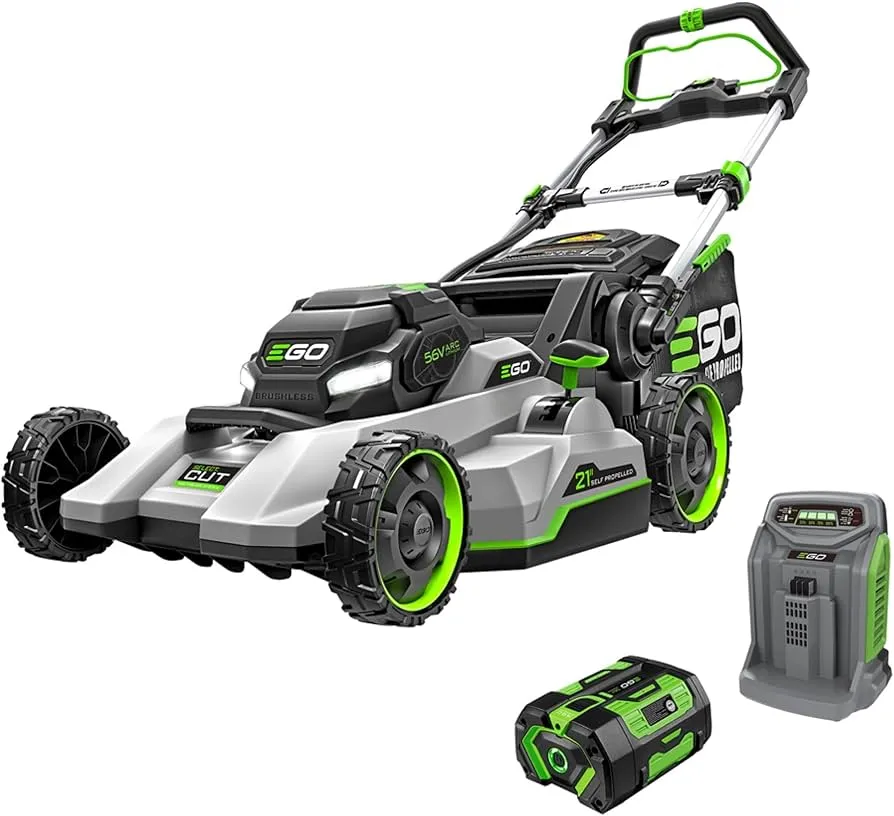
Your EGO battery is sitting on the charger with a red light. Or maybe it shows full but dies after five minutes of mowing. Either way, you’re stuck with a $200+ battery that won’t work.
The good news: most EGO battery problems are fixable. Temperature issues, dirty contacts, and calibration drift are the usual culprits. Before you buy a replacement, try these troubleshooting steps. For other battery brands, see our Greenworks battery problems and Ryobi 40V battery not charging guides.
Battery Options
All EGO batteries use the same 56V Arc Lithium system. They’re interchangeable across all EGO tools.
| Model | Capacity | Mower Runtime | Weight |
|---|---|---|---|
| BA1400 | 2.5 Ah | ~30 min | 1.6 lb |
| BA2800 | 5.0 Ah | ~60 min | 2.7 lb |
| BA4200 | 7.5 Ah | ~90 min | 3.8 lb |
| BA5600 | 10.0 Ah | ~120 min | 4.5 lb |
| BA6720 | 12.0 Ah | ~150 min | 5.4 lb |
The 7.5 Ah battery hits the sweet spot for most users—good runtime without excessive weight.
Reading the Battery Fuel Gauge
Press the button on the battery to check charge level:
- 4 LEDs lit = 75-100% charged
- 3 LEDs lit = 50-75%
- 2 LEDs lit = 25-50%
- 1 LED lit = 0-25%
- Flashing LEDs = Error or critically low
Charger Light Signals
Standard Charger (CH2100)
| Light | What It Means |
|---|---|
| Solid green | Done charging |
| Flashing green | Currently charging |
| Solid red | Battery problem (won’t charge) |
| Flashing red | Too hot or too cold |
| No light | No power to charger or no battery detected |
Rapid Charger (CH5500)
| Light | What It Means |
|---|---|
| Green | Done |
| Amber | Charging |
| Red | Error or temperature issue |
| Blue | Cooling fan running |
Turbo Charger (CH7500)
The fastest option with active cooling:
- 5.0 Ah battery: ~40 minutes
- 7.5 Ah battery: ~60 minutes
- 10.0 Ah battery: ~80 minutes
Troubleshooting Charging Issues
This is the most common problem. Work through these causes in order.
Check #1: Temperature
Lithium batteries refuse to charge when too hot or too cold. This is a safety feature, not a defect.
Too hot: You just used the battery, or it sat in direct sun. The charger shows a flashing red light.
Too cold: It’s below 40°F. Common in garages during winter.
The fix: Bring the battery inside and let it sit at room temperature (60-80°F) for at least 30 minutes. Then try charging again.
Check #2: Dirty Contacts
Grass clippings, dust and corrosion build up on the metal contacts. If the charger can’t make a good connection, it won’t charge.
The fix:
- Dip a cotton swab in isopropyl alcohol
- Clean all metal contacts on the battery
- Clean the charger contacts too
- Let everything dry completely
- Try charging
Check #3: Deep Discharge
If the battery sat unused for months, it may have discharged below the level where the charger recognizes it. The charger sees “no battery” even though one is inserted.
The fix: Try the tool activation reset (below).
Battery Drains Quickly
The battery charges to 100% but runs out of juice way sooner than it used to.
Normal aging: Lithium batteries lose capacity over time. After 500 charge cycles or 3-5 years, expect 20-30% less runtime. That’s normal.
Sudden drop: If runtime dropped dramatically (like 50%+ loss), the cells may be damaged or out of balance. Try the full cycle reset before replacing.
Cell failure: If one cell in the pack fails, the whole battery suffers. A battery tester can confirm cell health. This usually requires replacement.
Battery Overheating
Some warmth during charging and heavy use is normal. Concerning heat is when:
- The battery is too hot to hold comfortably
- The charger shows a red light and stops
- The tool shuts down mid-use
What to do: Stop using immediately. Set the battery in a safe location away from flammable materials and let it cool completely. If this keeps happening, the battery may have internal damage.
Full Battery But No Power?
The fuel gauge shows 4 LEDs but the tool won’t run, or it dies immediately.
This is a calibration issue. The battery management system (BMS) has lost track of the actual charge level. The full cycle reset fixes this.
How to Reset the Battery
Quick Reset (Try This First)
- Insert the battery into any EGO tool
- Pull the trigger for 1-2 seconds
- Remove the battery
- Put it back on the charger
Sometimes this “wakes up” a battery that won’t charge.
Full Cycle Reset
This recalibrates the battery management system:
- Charge the battery to 100%
- Use it in a tool until completely dead
- Recharge to 100%
- Repeat 2-3 times
Charger Reset
If the charger itself seems stuck:
- Unplug the charger for 60 seconds
- Plug it back in
- Wait 10 seconds
- Insert the battery
Contact Cleaning Reset
- Remove battery from everything
- Clean all metal contacts with isopropyl alcohol
- Clean the charger contacts
- Let dry completely (5 minutes)
- Try charging
Storage Tips
Short-Term (Under 3 Months)
Store at room temperature at any charge level. Keep dry.
Long-Term (Over 3 Months)
- Store at 30-50% charge (not full, not empty). See our storage guide for more tips.
- Check every 3 months and recharge if below 20%
- Keep indoors—not in a freezing garage
Winter Storage
Bring batteries inside before the first freeze. Lithium batteries lose capacity permanently if stored below freezing. Charge them every 2-3 months through winter, but warm them to room temperature first.
Extending Battery Life
Do This
- Charge at room temperature
- Let the battery cool after heavy use before charging
- Store at 30-50% charge for long periods
- Use the right size battery for demanding tools
Avoid This
- Leaving batteries on the charger for days
- Storing fully charged or completely dead
- Charging a hot battery right after use
- Dropping or impacting the battery
- Leaving batteries in hot cars or direct sun
Signs It’s Time for a New Battery
Signs It’s Time
- Runtime is less than half of what it used to be
- Won’t charge despite troubleshooting
- Case is cracked or physically damaged
- Gets excessively hot during use
- Battery is 4-5+ years old with regular use
If the Battery Is Swollen
A bulging or swollen battery case is a serious safety issue. The cells are damaged and could catch fire.
- Stop using immediately
- Don’t charge it
- Don’t puncture or crush it
- Take it to a battery recycling center (Home Depot, Lowe’s, Best Buy all accept them)
Do not throw lithium batteries in the trash.
Replacement Costs
| Battery | Price | Cost Per Ah |
|---|---|---|
| 2.5 Ah | ~$130 | $52/Ah |
| 5.0 Ah | ~$200 | $40/Ah |
| 7.5 Ah | ~$280 | $37/Ah |
| 10.0 Ah | ~$350 | $35/Ah |
Bigger batteries cost less per amp-hour. The 7.5 Ah is usually the best value.
EGO Battery Warranty
EGO covers batteries for 3 years. Keep your receipt.
Covered: Manufacturing defects, premature capacity loss, charging failures from defects.
Not covered: Physical damage, normal wear, damage from improper storage.
Faulty Charger Diagnosis
Test with a different battery first. If multiple batteries won’t charge, the charger is the problem.
| Charger | Price | Charge Time (5Ah) |
|---|---|---|
| CH2100 Standard | ~$50 | 90 min |
| CH5500 Rapid | ~$100 | 50 min |
| CH7500 Turbo | ~$150 | 40 min |
The standard charger is fine for most people. Rapid and Turbo chargers make sense if you have multiple batteries and need fast turnaround.
EGO Chainsaw Problems (CS1800 / CS2005)
| Spec | CS1800 | CS2005 |
|---|---|---|
| Bar | 18” | 20” |
| Chain Speed | 6300 FPM | 6800 FPM |
| Weight | 14.4 lbs | 15.2 lbs |
Won’t Start
The safety sequence matters. Press the lockout button FIRST (top of handle), THEN squeeze the main trigger. Backward = nothing happens. Also check: chain brake released (pull handlebar guard back toward you), battery seated, battery charged.
Chain Won’t Move
Motor runs but chain sits still. Four causes: chain brake engaged, chain derailed from bar, tension too tight or bar groove packed with debris.
Stalls While Cutting
Motor overload protection. A dull chain is the #1 cause — it forces the motor to work too hard. Also check chain tension and bar groove. Wait 30 seconds, resume with less pressure. If it keeps happening, sharpen the chain.
Signs of a dull chain: fine sawdust instead of chips, have to push hard, cut wanders or curves.
Chain Keeps Coming Off
Tension too loose, bar rails worn or chain stretched. Loosen bar mounting nuts, use the tool-free tensioner, set chain so it has slight sag but pulls tight when you lift it, then tighten while holding bar nose up.
Oiler Not Working
Check oil level. Use bar and chain oil, not motor oil. Remove bar and chain, run saw briefly, watch for oil at the delivery port. No oil = pump problem. Never run dry.
Chainsaw Parts
| Part | Cost |
|---|---|
| Chain 18” (Oregon S62) | $15-25 |
| Chain 20” (Oregon S68) | $18-28 |
| Bar oil | $10-15/qt |
EGO Blower Problems (LB6504 / LB7654)
| Model | CFM | MPH |
|---|---|---|
| LB6151 | 615 | 170 |
| LB6504 | 650 | 180 |
| LB7654 | 765 | 200 |
Won’t Turn On
Check: battery seated (push until click), battery charged (press gauge), trigger lock in OFF position (must be OFF before pulling trigger). Remove battery for 30 seconds and reinstall if nothing happens.
Weak Airflow
- Check battery charge — power drops as charge drops
- Clear debris from the air intake screen
- Make sure tube is locked on tight
- Look for cracked impeller blades inside housing
Turbo Issues
Turbo won’t engage if battery charge is low. Pull trigger first, then press turbo. Turbo is for short bursts — the motor heats up and thermal protection kicks in during continuous use. Turbo drains batteries about 4x faster than variable speed.
Noise Problems
Motor whine that increases with speed is normal. Grinding, rattling or scraping is not — stop immediately and check for debris in the tube, damaged fan or worn bearings.
Third-Party Batteries
Cheap “EGO-compatible” batteries exist on Amazon. Skip them. Unknown cell quality, no UL certification, potential fire hazard and it voids your tool warranty. The $50-100 savings isn’t worth the risk.
EGO warranties: tools get 5 years, batteries get 3 years. Register at egopowerplus.com.