Fix the Drive System on Toro, Craftsman, Honda and Troy-Bilt Mowers
Your self-propelled mower won’t move on its own. The engine runs fine but you’re pushing it like a regular mower. This guide covers the most common causes and fixes across all major brands. If the engine itself won’t run, start with our lawn mower won’t start guide instead.
Quick Diagnosis
Before tearing anything apart, run through these quick checks.
Check the Bail Lever
The drive bail (handle you squeeze) engages the self-propel system. Make sure it moves freely and returns when released.
Common bail problems:
- Bent or binding lever
- Broken return spring
- Bail not fully engaging cable
Listen for Drive Engagement
With the engine running, squeeze the bail slowly. You should hear or feel the drive system engage - usually a slight change in engine sound or a click.
No engagement sound = cable or transmission issue Engagement sound but no movement = belt or wheel issue
Check the Wheels
Lift the rear of the mower and spin the wheels by hand.
- Wheels spin freely both directions - Drive not engaging
- Wheels locked when bail engaged - Trans working, belt slipping
- One wheel spins, one doesn’t - Differential or axle issue
[NEED REAL IMAGE: Testing mower wheel engagement]
Cable Problems
The drive cable connects the bail lever to the transmission. It’s the most common cause of self-propel failure.
Symptoms of Bad Cable
- Bail lever feels loose or floppy
- Mower worked yesterday, won’t engage today
- Have to squeeze bail extremely hard
- Drive engages inconsistently
Cable Adjustment
Most mowers have cable adjustment. This is always the first thing to try.
Locate the adjustment:
- At the handlebar end (Z-fitting adjustment)
- At the transmission end (barrel adjuster)
- Mid-cable (in-line adjuster)
How to adjust:
- Find the adjuster barrel or threaded fitting
- Loosen the lock nut if present
- Turn the adjuster to increase cable tension
- The cable should have minimal slack when the bail is released
- Squeeze bail - should engage smoothly
- Tighten lock nut
[NEED REAL IMAGE: Drive cable adjustment location]
Cable Replacement
If adjustment doesn’t help or the cable is frayed or broken, replace it.
Signs you need a new cable:
- Visible fraying or broken strands
- Cable kinked or bent sharply
- Inner cable pulled out of housing
- Cable stretched beyond adjustment range
Replacement steps:
- Note cable routing before removal
- Disconnect at bail lever end (usually a Z-fitting)
- Disconnect at transmission end
- Remove any cable guides or clips
- Thread new cable through same path
- Connect both ends
- Adjust cable tension
Cable cost: $10-25 depending on brand
Belt Problems
The drive belt transfers power from the engine to the transmission. Worn or broken belts cause complete drive failure.
Symptoms of Bad Belt
- Engine revs higher when drive engaged (belt slipping)
- Drive works on flat ground but not uphill
- Burning rubber smell
- Drive stopped suddenly (belt broke)
Belt Inspection
Access varies by model. Usually requires removing a belt cover or tipping the mower.
Check for:
- Cracks in the belt surface
- Glazed (shiny) sides from slipping
- Missing chunks
- Excessive wear
- Correct belt tension
[NEED REAL IMAGE: Worn vs new mower drive belt]
Belt Replacement
General steps:
- Disconnect spark plug
- Remove belt cover or tip mower to access
- Note belt routing - take a photo
- Release belt tension (spring-loaded or adjustment bolt)
- Slip belt off pulleys
- Install new belt following same path
- Restore tension
- Reinstall covers
Belt part numbers by brand:
| Brand/Model | Belt Part Number |
|---|---|
| Toro Recycler | 119-8820 |
| Honda HRX217 | 22431-VL0-B01 |
| Craftsman M220 | 954-04032 |
| Troy-Bilt | 954-04032 |
| Husqvarna | 532130969 |
Belt cost: $15-35
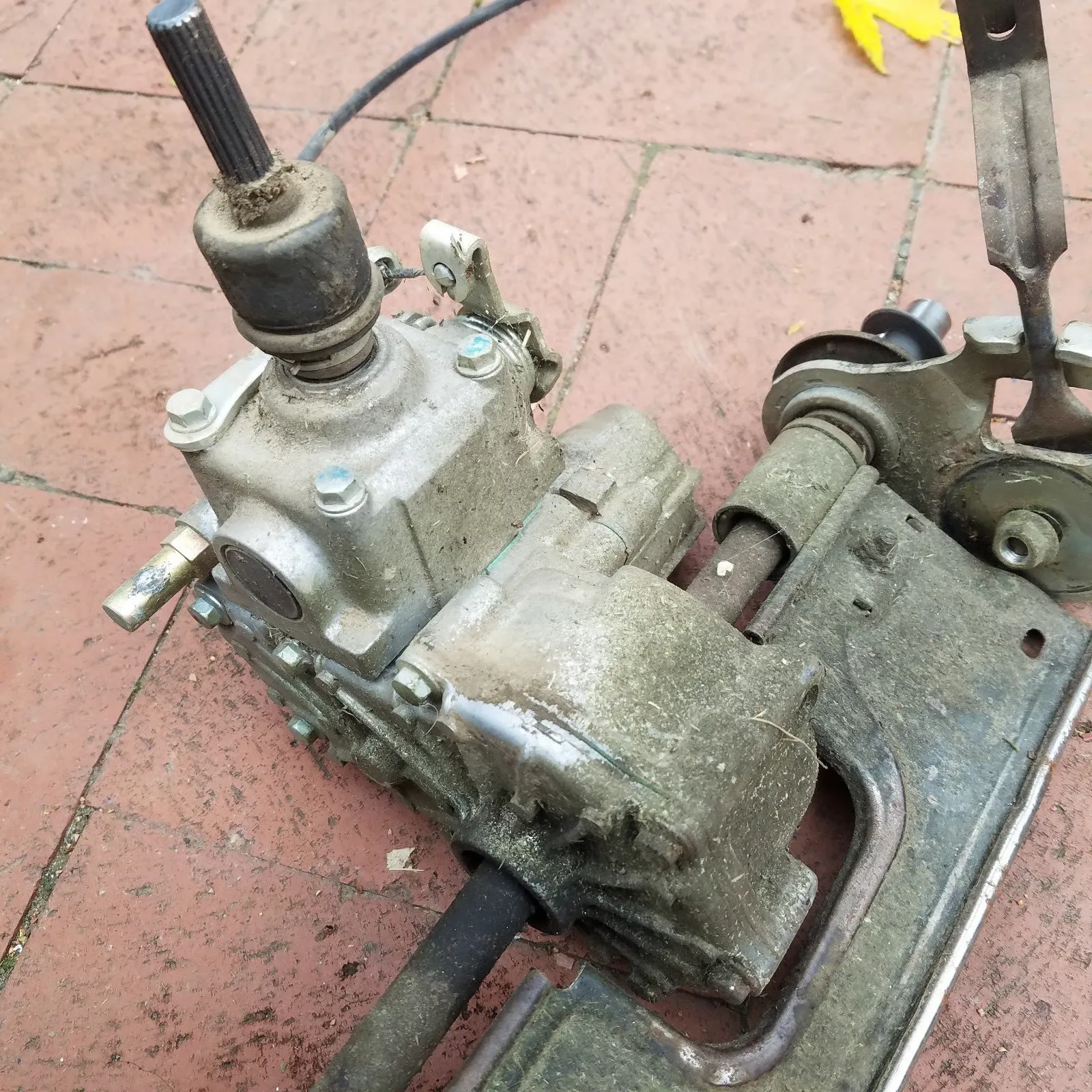
Transmission Problems
If cable and belt are good but drive still doesn’t work, the transmission may be bad.
Transmission Types
Friction wheel - A rubber wheel contacts a friction disc. Simple but wears out.
Gear drive - Internal gears transfer power. More durable but fails eventually.
Hydrostatic - Fluid-driven (on premium models). Expensive to fix.
Signs of Trans Failure
- Grinding noise when drive engaged
- Drive works intermittently then quits
- Metal shavings around transmission
- Fluid leaking (hydrostatic only)
Can You Repair It?
Transmissions are usually sealed units. Most home repairs involve:
- Replacing the friction wheel/disc
- Cleaning debris from gears
- Replacing the entire unit
Internal gear repairs require special tools and parts that cost more than a new trans.
Transmission cost by brand:
| Brand | Trans Cost |
|---|---|
| Toro Personal Pace | $80-120 |
| Honda GCV | $100-150 |
| Craftsman/MTD | $60-100 |
| Husqvarna AWD | $120-180 |
[NEED REAL IMAGE: Lawn mower transmission removed]
Fixes by Brand
Toro Personal Pace Not Working
Toro’s Personal Pace system uses a unique design — push the handle down to engage drive. See the Toro Personal Pace parts diagram for component locations.
Common issues:
Drive cable stretched The cable running to the transmission stretches over time.
- Adjust at the transmission end
- Turn adjuster clockwise to tighten
- Cable should barely move when bail released
Transmission worn Personal Pace transmissions last 5-8 years with normal use. Our Toro Recycler repair guide covers the full replacement process.
- If adjustment maxed out, replace trans
- Toro trans part: 106-3955
Drive wheels worn The tread on drive wheels wears smooth.
- Check wheel tread depth
- Replace if worn smooth
- Rear wheels: 115-4695
Honda Self-Propelled Not Working
Honda uses a gear-driven transmission that’s generally reliable. Our Honda HRX217 repair guide covers this model in depth.
HRX217 issues:
Drive clutch adjustment The clutch lever has adjustment.
- Locate clutch cable at transmission
- Adjust to restore proper engagement
Transmission slipping Honda transmissions can develop internal wear.
- Check transmission fluid level (if applicable)
- Consider replacement if slipping persists
Drive engagement lever binding The lever on the handlebar can stick.
- Lubricate pivot points
- Check for bent or damaged components
Craftsman/Troy-Bilt Self-Propelled Not Working
MTD-built mowers use similar front-wheel drive systems. See our Craftsman M220 problems guide and Troy-Bilt mower problems guide for model-specific fixes.
M220/M230 issues:
Front drive cable The cable runs from the bail to the front axle.
- Adjust at the handlebar end
- Check for fraying near the bend points
Drive gears stripped Plastic gears in the front axle can strip.
- Remove front wheels to inspect
- Replacement gear kits available
- Part: 717-0528
Drive engagement spring A spring provides tension for engagement.
- Check spring at transmission linkage
- Replace if stretched or broken
Ryobi/EGO Electric Self-Propelled Not Working
Battery mowers have different drive systems - usually direct motor drive.
Common issues:
Motor controller fault Electronic issue preventing drive motor activation.
- Check for error codes
- Try battery reset (remove/reinstall)
- May need dealer service
Wheel motor failure Individual wheel motors can fail.
- Usually not user-serviceable
- Warranty repair recommended
Wiring damage Wires to drive motors can be damaged.
- Inspect wiring harness
- Check connections at motor
[NEED REAL IMAGE: Electric mower drive motor]
Husqvarna AWD Not Working
Husqvarna AWD mowers drive all four wheels through separate systems.
Front drive issues:
- Cable adjustment at front axle
- Front drive belt condition
- Engagement lever function
Rear drive issues:
- Rear drive cable
- Transmission engagement
- Drive wheel tread
AWD systems are more complex. If basic checks don’t solve it, professional service may be needed.
Repair vs Replace
Worth Repairing
- Cable adjustment or replacement ($10-25)
- Drive belt replacement ($15-35)
- Drive wheel replacement ($20-40)
- External components accessible and affordable
Consider Replacing Mower
- Transmission failure on old mower (repair costs $100+)
- Multiple systems failing
- Mower over 8-10 years old
- Repair cost exceeds 50% of replacement cost
DIY vs Professional
DIY-friendly:
- Cable adjustment and replacement
- Belt replacement
- Wheel replacement
- External component repairs
Better for professionals:
- Hydrostatic transmission service
- Internal trans repairs
- AWD system diagnosis
- Electric motor drive issues
Maintenance Tips
Keep the drive system working longer:
- Keep it clean - Debris wears components faster
- Check cable tension annually — Adjust before it fails
- Inspect belt yearly — Replace at first signs of wear
- Sharpen the blade while you’re under there — Two birds, one job
- Don’t force it - Slipping drive means something needs attention
- Store properly - Moisture causes cable corrosion
Related Guides
- Toro Recycler Repair Guide
- Honda HRX217 Repair Guide
- Craftsman M220 Problems
- Troy-Bilt Mower Problems
- Lawn Mower Won’t Start
Summary
Self-propelled failures usually come down to three things: cable, belt or transmission. Start with cable adjustment - it’s free and fixes most problems. If that doesn’t work, inspect the belt. Transmission failure is the worst case but still fixable if the mower is worth the investment.