Choose the Right Golf Cart Batteries: 6V, 8V and 12V Options
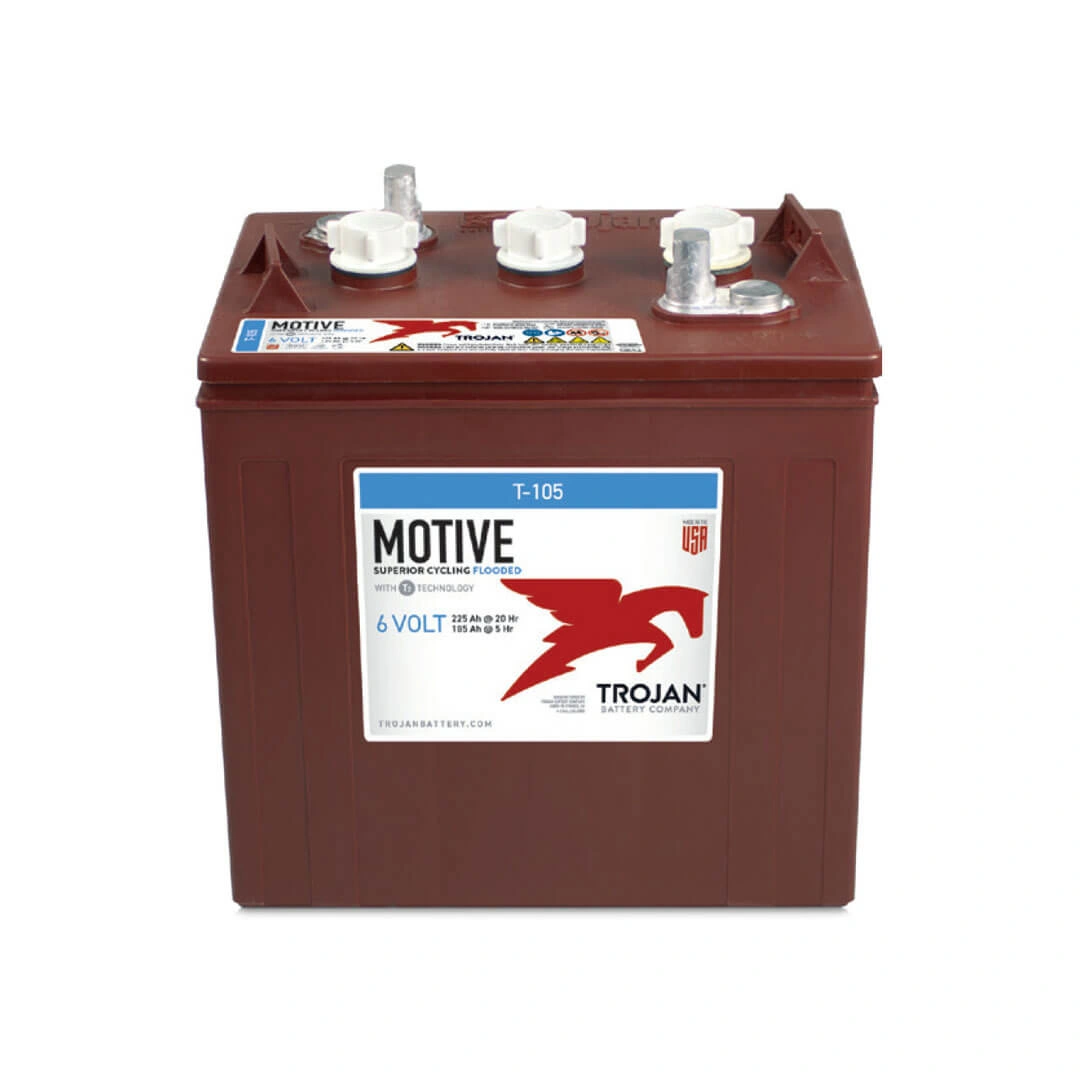
A full set of batteries for golf cart use costs $600-1,800 for lead acid or $2,000-5,000 for lithium. Most 48V carts use six 8-volt batteries ($700-1,200 for the set). Trojan is the industry standard brand. Replace all batteries at once—mixing old and new shortens the life of the new ones.
This guide covers what you should know about buying golf cart batteries. We’ll compare 6V, 8V and 12V options, review the top brands and walk through installation basics.
Voltage Options
Your cart’s voltage determines which batteries you need. Check the total system voltage, not individual battery voltage.
36V Golf Cart Batteries
Older carts and some Club Car models use 36V systems.
Configuration: 6 × 6V batteries wired in series
Pros:
- 6V batteries have thicker plates and longer life
- More amp-hour capacity per battery
- Well-proven technology
Cons:
- Being phased out by manufacturers
- Less efficient than 48V
- Slower acceleration and lower top speed
Cost: $600-1,000 for quality 6V set
48V Golf Cart Batteries (Most Common)
The current standard for golf carts. More efficient with better performance.
Configuration options:
- 6 × 8V batteries (most common)
- 8 × 6V batteries (older 48V carts)
- 4 × 12V batteries (budget option)
Why 8V is preferred:
- Better balance of capacity and weight
- Fits standard battery compartments
- More efficient than 6V at 48V total
Cost: $700-1,200 for six 8V batteries
72V Golf Cart Batteries
High-performance carts and modified builds.
Configuration: 6 × 12V batteries or 12 × 6V batteries
Used for:
- Lifted carts
- Heavy-duty utility carts
- Speed modifications
Cost: $900-1,500 for the set
6 Volt vs 8 Volt vs 12 Volt: Which Is Best?
The debate comes down to capacity vs convenience.
6 Volt Golf Cart Batteries
Capacity: 200-230 Ah typical Weight: 60-70 lbs each Cycle life: 700-1,000 cycles
Thicker plates mean longer life and more capacity. The downside: you need more of them for higher voltage systems.
Best for: 36V carts, maximum range needs, commercial use
8 Volt Golf Cart Batteries
Capacity: 150-180 Ah typical Weight: 55-65 lbs each Cycle life: 600-900 cycles
The sweet spot for most 48V carts. Good balance of capacity and efficiency.
Best for: Standard 48V carts, most residential users
12 Volt Golf Cart Batteries
Capacity: 100-150 Ah typical Weight: 45-60 lbs each Cycle life: 400-700 cycles
Thinner plates for higher voltage mean shorter life. But you only need 4 for a 48V system.
Best for: Budget replacements, light-duty use
Comparison Table
| Voltage | For 48V System | Total Weight | Typical Ah | Price Range |
|---|---|---|---|---|
| 6V | 8 batteries | 500-560 lbs | 200+ Ah | $800-1,400 |
| 8V | 6 batteries | 330-390 lbs | 150-180 Ah | $700-1,200 |
| 12V | 4 batteries | 180-240 lbs | 100-150 Ah | $400-800 |
Best Brands
Premium Tier
Trojan - The industry standard
- Made in USA
- Highest quality control
- Best resale value on used carts
- 18-month warranty typical
- Price: $150-200 per battery
Crown - Professional grade
- Heavy-duty construction
- Excellent deep cycle performance
- 12-month warranty
- Price: $130-170 per battery
Mid Tier
US Battery - Solid value
- Good performance for the price
- Made in USA
- 12-month warranty
- Price: $110-150 per battery
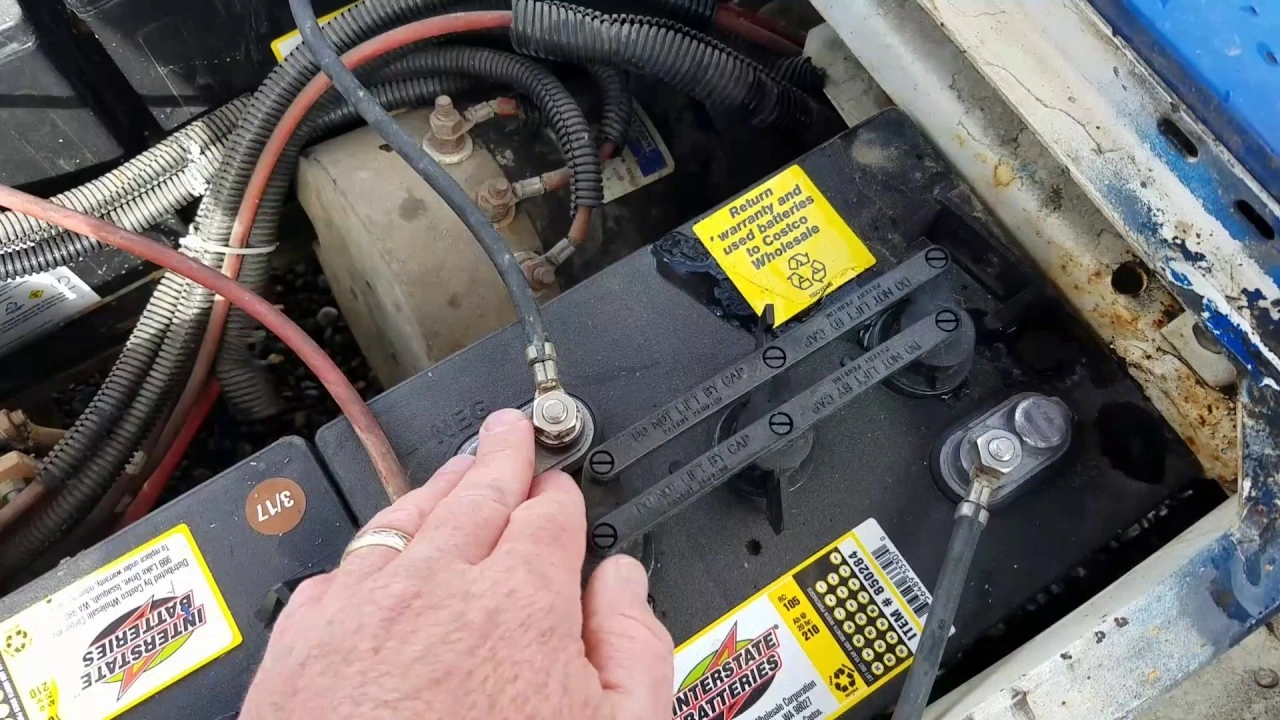
Interstate - Widely available
- Sold at many auto parts stores
- Decent quality for residential use
- 12-month warranty
- Price: $100-140 per battery
Budget Tier
Duracell (made by various OEMs)
- Available at Sam’s Club, Costco
- Acceptable for light use
- 12-month warranty typical
- Price: $90-130 per battery
No-name imports
- Quality varies wildly
- Shorter lifespan typical
- Limited warranty support
- Price: $70-100 per battery
Where to Buy
Best Options
Golf cart dealers - Carry Trojan, Crown and US Battery. Can install and dispose of old batteries. Higher prices but expert support.
Battery specialty stores (Batteries Plus, Interstate locations) - Good selection, competitive prices. May offer installation.
Costco/Sam’s Club - Duracell and Interstate brands at wholesale prices. No installation but good return policy.
Amazon - Crown and US Battery available. Watch shipping costs—batteries are heavy.
Local auto parts stores - Interstate and other brands. Convenient but selection varies.
What to Avoid
- Unknown brands with no US warranty support
- “Refurbished” golf cart batteries (usually junk)
- Mixing brands or ages in your set
- Buying individual batteries instead of matched sets
How to Choose the Right Batteries
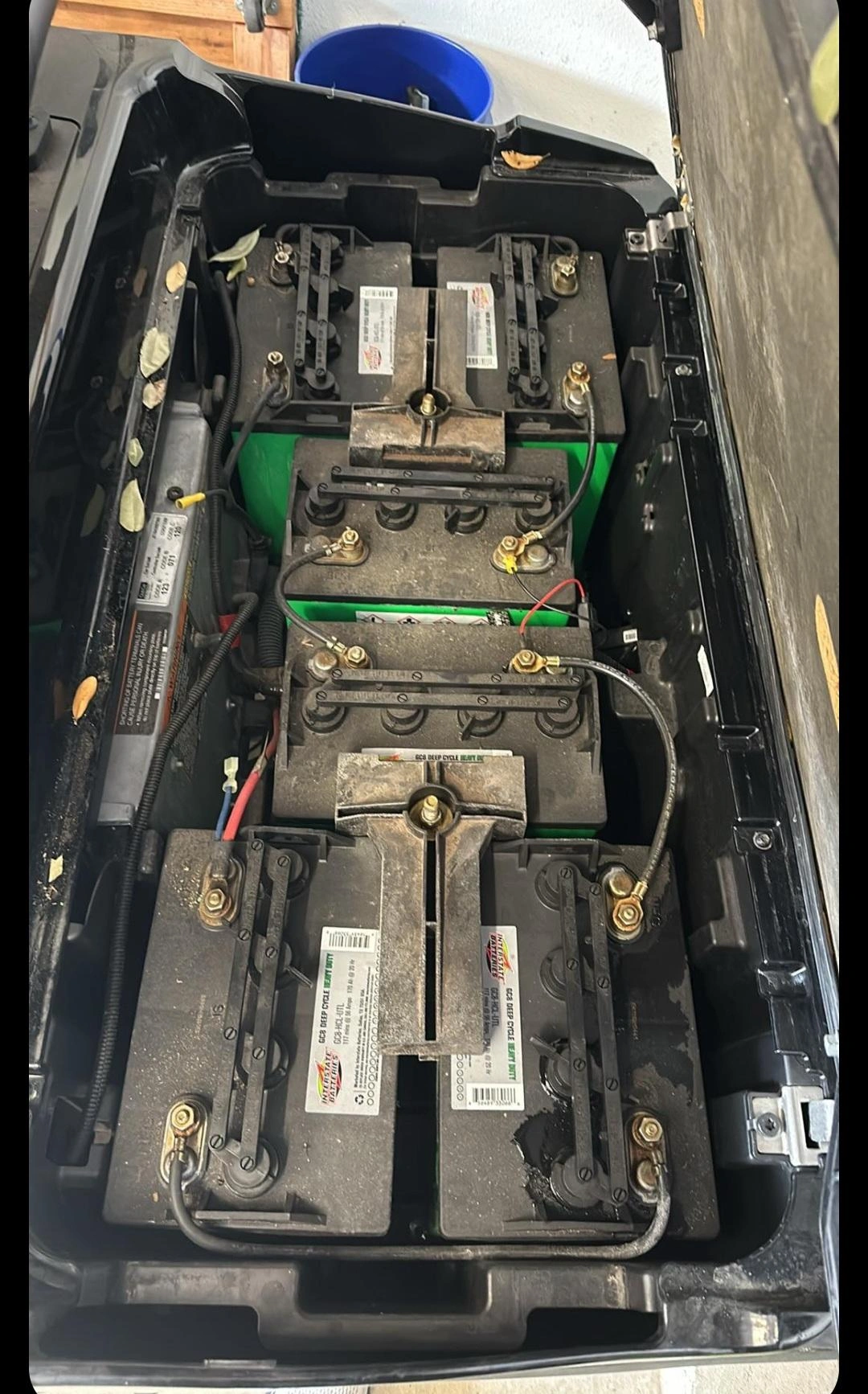
Step 1: Identify Your System Voltage
Check your cart’s specifications or count existing batteries:
- 6 × 6V = 36V system
- 6 × 8V = 48V system
- 8 × 6V = 48V system
- 4 × 12V = 48V system
Step 2: Measure Your Battery Compartment
Battery dimensions vary by brand. Measure:
- Length, width, height of each slot
- Total compartment space
- Terminal post locations (same side or opposite)
Step 3: Match Capacity to Usage
Light use (1-2 rounds per week): Standard capacity works fine
Heavy use (daily or commercial): Choose higher Ah ratings
Long range needs: Consider 6V batteries for maximum capacity
Step 4: Consider Your Budget
| Budget Level | Recommendation |
|---|---|
| Tight ($400-700) | 4 × 12V Interstate or Duracell |
| Moderate ($700-1,000) | 6 × 8V US Battery or Interstate |
| Quality ($1,000-1,500) | 6 × 8V Trojan or Crown |
| Premium ($2,000+) | Lithium conversion |
Installation
Basic installation takes 1-2 hours with common tools.
Tools Needed
- 1/2” and 9/16” wrenches or sockets
- Wire brush for terminal cleaning
- Battery terminal protector spray
- Safety glasses and gloves
- Battery lifting strap (optional but helpful)
Installation Steps
1. Safety first Turn off the key switch. Remove any accessories. Work in a ventilated area.
2. Document existing wiring Take photos before disconnecting anything. Note which cables go where.
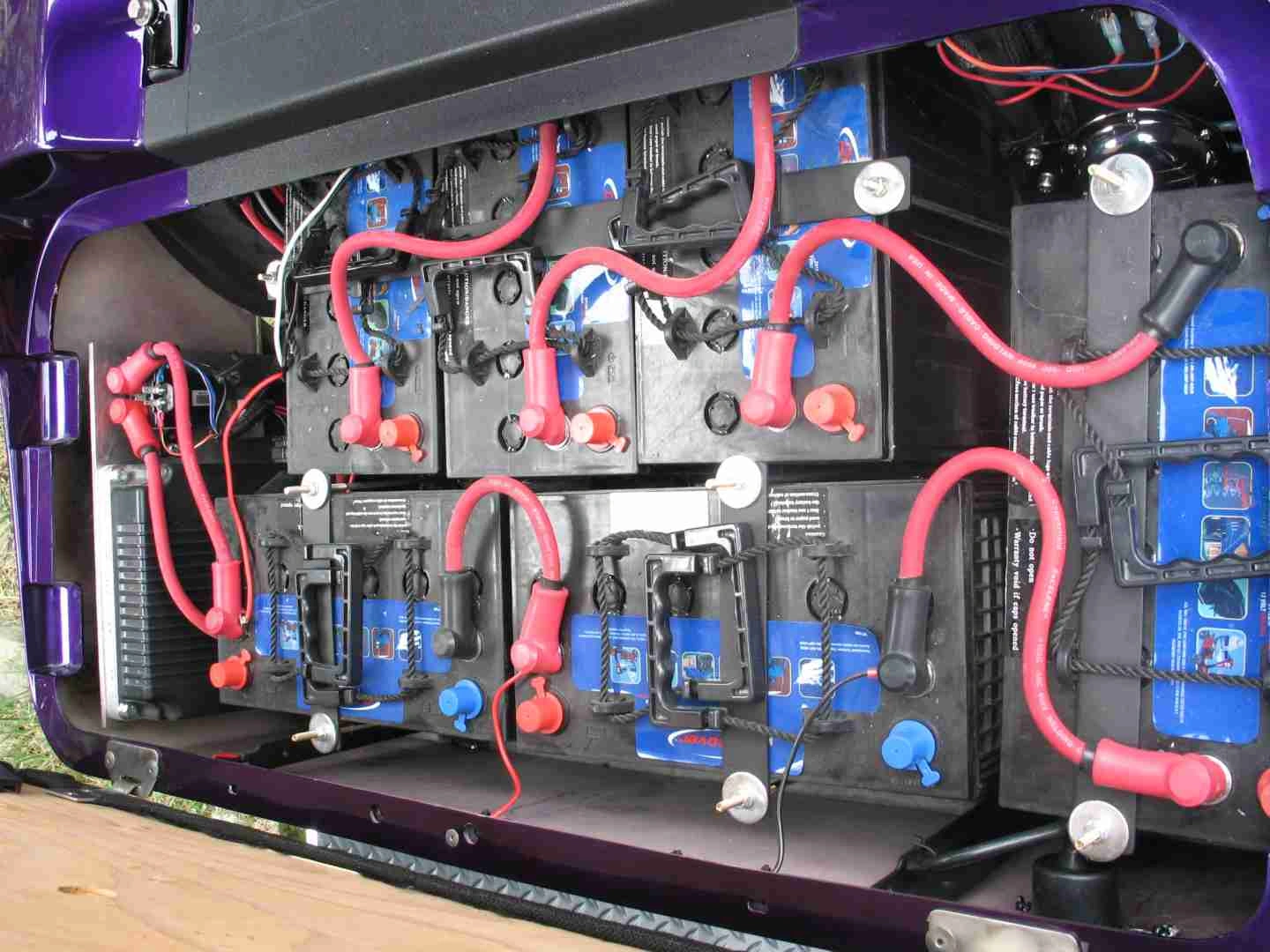
3. Disconnect old batteries Start with the main negative cable (goes to frame or controller). Then disconnect all battery interconnects.
4. Remove old batteries Lift straight up. Each battery weighs 55-70 lbs. Use proper lifting technique or a strap.
5. Clean the compartment Remove corrosion and debris. Check for damaged cables or connectors.
6. Install new batteries Place in same orientation as original. Positive and negative posts must align with cable routing.
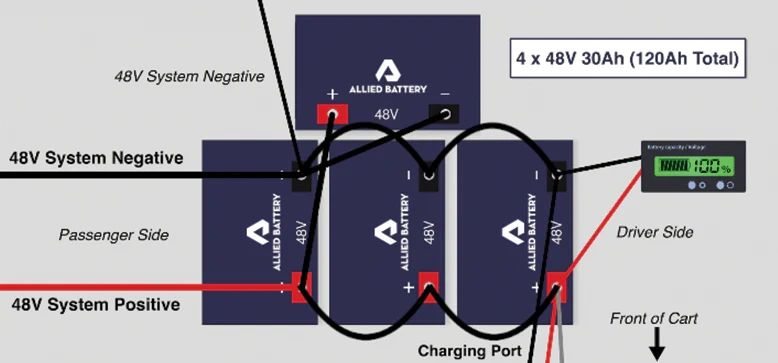
7. Connect cables Install all interconnect cables first. Then connect main positive. Connect main negative last.
8. Check all connections Wiggle each connection to verify tight fit. Apply terminal protector spray.
9. Initial charge Fully charge before first use. This conditions the batteries and verifies the charger works.
Maintenance Tips
Proper maintenance doubles battery life.
Weekly Tasks
- Charge after every use (even short trips)
- Check for loose connections
- Look for corrosion buildup
Monthly Tasks
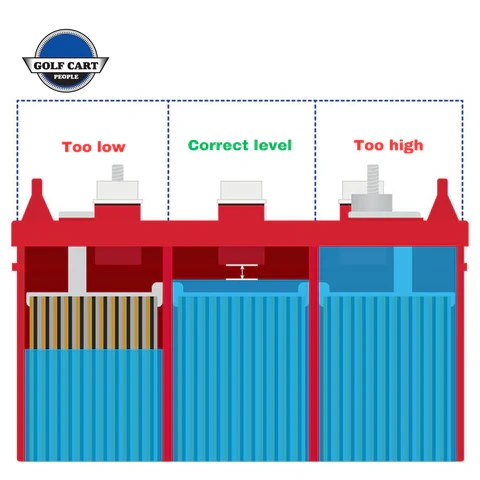
- Check water levels (flooded batteries only)
- Add distilled water if plates are exposed
- Clean terminals if corrosion is visible
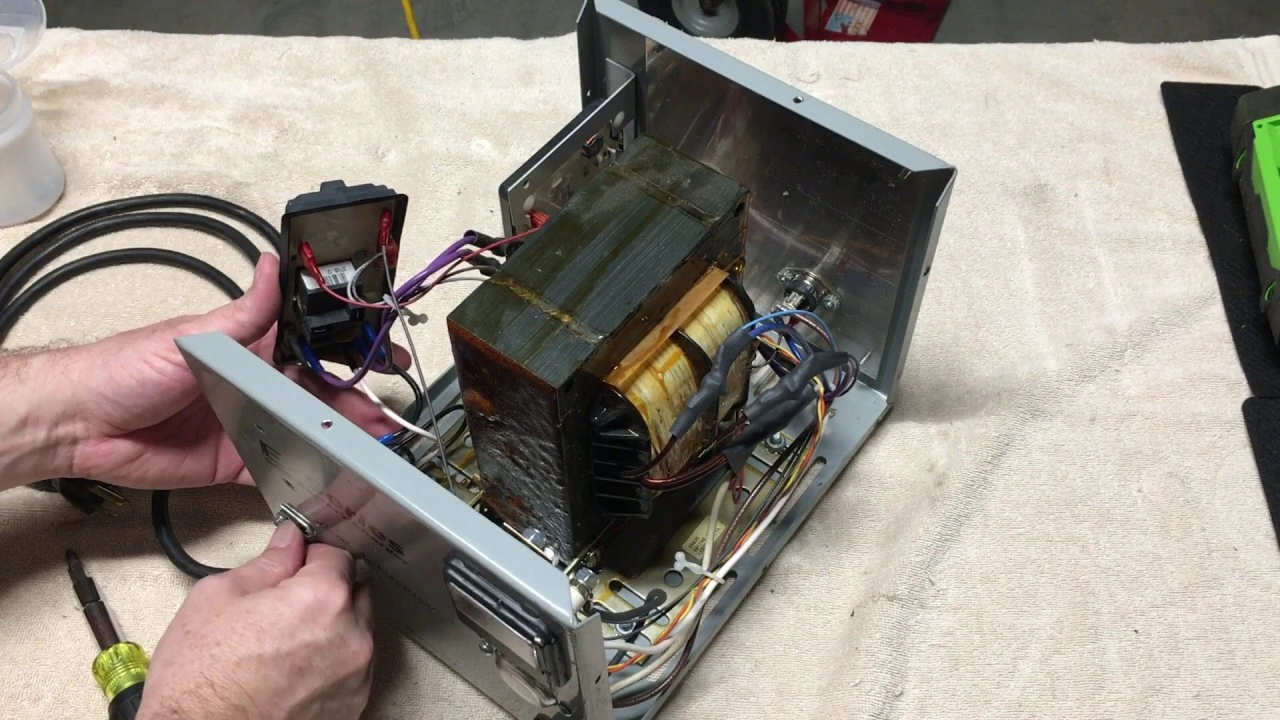
- Verify charger is completing full cycle
Seasonal Tasks
- Equalize charge every 1-3 months (flooded batteries)
- Clean battery tops and compartment
- Check cable condition for cracks or wear
- Test individual battery voltages
Storage
If storing for extended periods:
- Charge fully before storage
- Disconnect main negative cable
- Charge monthly during storage
- Store in cool, dry location
Signs You Need New Batteries
Replace your batteries when you notice:
- Reduced range - Used to get 36 holes, now only 18
- Slow acceleration - Cart struggles on hills
- Longer charge times - Takes 12+ hours to charge
- Swollen cases - Battery cases bulging outward
- Corroded terminals - Excessive buildup that keeps returning
- Individual cell failure - One battery significantly weaker than others
- Age - Over 5-6 years old regardless of condition
Flooded vs AGM vs Gel for Golf Carts
Flooded Lead Acid (Most Common)
Pros:
- Cheapest option
- Longest cycle life
- Can be equalized to extend life
- Most forgiving of charging variations
Cons:
- Requires monthly water checks
- Produces hydrogen gas (needs ventilation)
- Can spill if tipped
Best for: Most golf cart owners willing to do basic maintenance
AGM (Absorbed Glass Mat)
Pros:
- Maintenance-free
- Spill-proof
- Better vibration resistance
- Faster charging
Cons:
- 30-50% more expensive
- Sensitive to overcharging
- Can’t be equalized
- Shorter cycle life than flooded
Best for: Owners who won’t do maintenance or need sealed batteries
Gel Batteries
Pros:
- Maintenance-free
- Best for deep discharge
- Longest shelf life
Cons:
- Most expensive lead acid option
- Very sensitive to charging voltage
- Requires specific charger settings
- Limited availability
Best for: Specialty applications, rarely used for golf carts
Related Guides
- Golf Cart Battery Charger Guide - Chargers and charging
- Lithium Batteries for Golf Carts - Lithium conversion
- Batteries in Series vs Parallel - Wiring configurations
- Battery Tester Guide - Testing battery health