Fix Self Propelled Lawn Mower
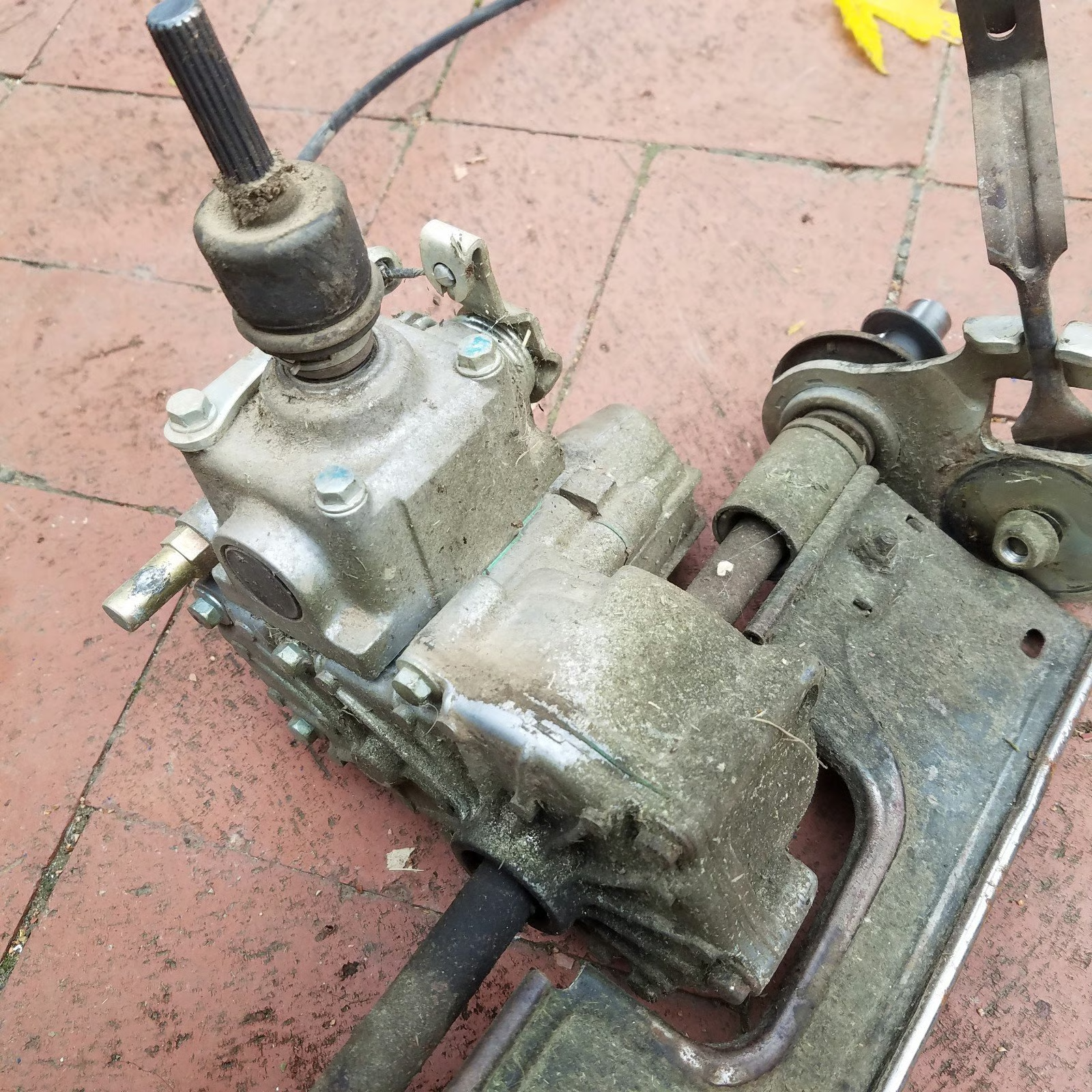
Mower engine runs fine but it won’t pull itself anymore? Before you panic about needing a new transmission, check the drive cable. That’s the problem 80% of the time and it’s a free fix - just turn a little barrel adjuster. If that’s not it, keep reading.
Table of Contents
- Drive System Types
- Quick Diagnosis
- Cable Adjustment
- Belt Replacement
- Transmission Issues
- Wheel and Gear Problems
Drive System Types
Front Wheel Drive (FWD)
- Drive wheels in front
- Better for flat terrain
- Lighter front end
- Common on basic models
Rear Wheel Drive (RWD)
- Drive wheels in back
- Better traction (weight over wheels)
- Better for hills
- Most common type
All Wheel Drive (AWD)
- All four wheels powered
- Best traction
- More complex
- Higher maintenance
[NEED IMAGE: Self-propelled drive system types comparison]
Quick Diagnosis
Diagnostic Flowchart
Self-propel not working
│
├── Bail lever feels normal?
│   ├── YES → Check cable at transmission
│   └── NO → Cable disconnected at handle
│
├── Cable tight at transmission?
│   ├── YES → Check belt condition
│   └── NO → Adjust or replace cable
│
├── Belt intact and tight?
│   ├── YES → Transmission or wheel issue
│   └── NO → Replace belt
│
└── Wheels turn freely by hand?
    ├── YES → Internal wheel gear issue
    └── NO → Debris or bearing issue
Quick Checks
- Cable connection - Connected at both ends?
- Cable tension - Slack in cable?
- Belt condition - Visible without removing covers?
- Wheel engagement - Do wheels resist turning when bail engaged?
Cable Adjustment
When to Adjust
- Weak or intermittent propulsion
- Bail travels far before engaging
- Recently replaced cable
- Seasonal tune-up
Adjustment Procedure
Location: Cable adjuster is at the transmission (rear of mower) or at the handle (some models)
Steps:
- Locate adjustment barrel
- Loosen jam nut (if present)
- Turn barrel clockwise to tighten
- Test engagement
- Repeat until smooth engagement at mid-travel
- Tighten jam nut
[NEED IMAGE: Self-propelled cable adjustment location]
Proper Adjustment
- Too loose: Bail goes to handle before engaging
- Too tight: Drags or engages immediately
- Just right: Smooth engagement at mid-travel, slight slack when released
Cable Replacement
When cable adjustment runs out:
- Purchase correct replacement cable
- Disconnect at both ends
- Note routing through guides
- Remove old cable
- Route new cable same path
- Connect at transmission first
- Connect at handle
- Adjust tension
Cable cost: $15-30 depending on brand
Belt Replacement
Symptoms of Bad Belt
- Slipping (squealing)
- No propulsion with tight cable
- Visible cracks or glazing
- Belt came off
Belt Access
Most mowers:
- Tip mower back (air filter up)
- Remove blade for access
- Belt is visible around transmission pulley
Some models require:
- Removing rear cover
- Dropping transmission
- Partial disassembly
[NEED IMAGE: Self-propelled drive belt location]
Belt Replacement Steps
- Disconnect spark plug
- Tip mower back
- Remove blade (for access)
- Note belt routing
- Release tensioner
- Remove old belt
- Install new belt on pulleys
- Re-tension
- Reinstall blade
- Test operation
Belt Part Numbers by Brand
| Brand | Common Models | Belt Number |
|---|---|---|
| Toro | Recycler | 117-1018 |
| Honda | HRX/HRR | 22431-VL0-B01 |
| Craftsman | M-series | 954-04259 |
| Husqvarna | LC series | 532197253 |
Transmission Issues
Symptoms of Transmission Failure
- Cable tight, belt good, still no propel
- Grinding noise from transmission
- Intermittent propulsion
- Transmission pulley spins but wheels don’t
Transmission Types
Variable speed (most common):
- Internal mechanism varies output
- Responds to cable input
- Not rebuildable - replace entire unit
Fixed speed:
- Simple on/off engagement
- Often belt-clutch type
- May be rebuildable
Transmission Replacement
Steps:
- Remove belt from transmission
- Disconnect cable
- Remove mounting bolts
- Note axle/gear alignment
- Remove transmission
- Transfer pulley to new unit (if needed)
- Install new transmission
- Reconnect cable and belt
- Adjust cable tension
Transmission cost: $60-150 depending on brand
[NEED IMAGE: Self-propelled transmission replacement]
Wheel and Gear Problems
Internal Wheel Gears
Many self-propelled mowers have drive gears inside the rear wheels.
Symptoms of worn wheel gears:
- Clicking noise when propelling
- One wheel doesn’t drive
- Wheel slips on axle
Fix: Replace wheel assembly (gears not sold separately on most models)
Wheel cost: $30-60 each
Axle Issues
Bent axle symptoms:
- Wobbling wheel
- Uneven drive
- Grinding noise
Fix: Replace axle or entire transmission assembly
Debris and Buildup
Grass and debris can jam drive components.
Check:
- Inside wheel hub
- Around axle
- Between belt and pulley
- Inside transmission pulley groove
Brand-Specific Tips
Toro Personal Pace
- Variable speed responds to handle pressure
- Cable adjustment is critical
- Transmission is expensive but reliable
- See Toro Personal Pace Parts
Honda Smart Drive
- Variable speed controlled by lever
- Uses different cable setup
- Very reliable transmission
- Check drive clutch if issues
Craftsman/MTD
- Often uses simple belt-clutch
- Belt tension is critical
- Cheaper transmission replacement
- Check for MTD parts compatibility
Repair Costs
| Repair | DIY Cost | Shop Cost |
|---|---|---|
| Cable adjustment | Free | $25-50 |
| Cable replacement | $15-30 | $50-100 |
| Belt replacement | $15-30 | $75-125 |
| Transmission | $60-150 | $150-300 |
| Wheel (each) | $30-60 | $60-100 |
Prevention
Extend Drive System Life
- Don’t force mower through thick grass
- Avoid hitting obstacles
- Keep belt and pulleys clean
- Lubricate cable annually
- Adjust cable as needed
Storage
- Release cable tension
- Clean drive components
- Store indoors
Related Guides
- Toro Personal Pace Parts Diagram
- Lawn Mower Belt Replacement
- Honda HRX217 Problems
- Craftsman Lawn Mower Parts
Summary
Most self-propelled problems are cable-related. Start with adjustment - it’s free and fixes 70% of issues. Belt replacement is the next most common repair. Transmission failure is less common but requires replacement (not rebuildable). Keep the drive system clean and properly adjusted for longest life.