Briggs & Stratton 791858 Carburetor | Intek Guide
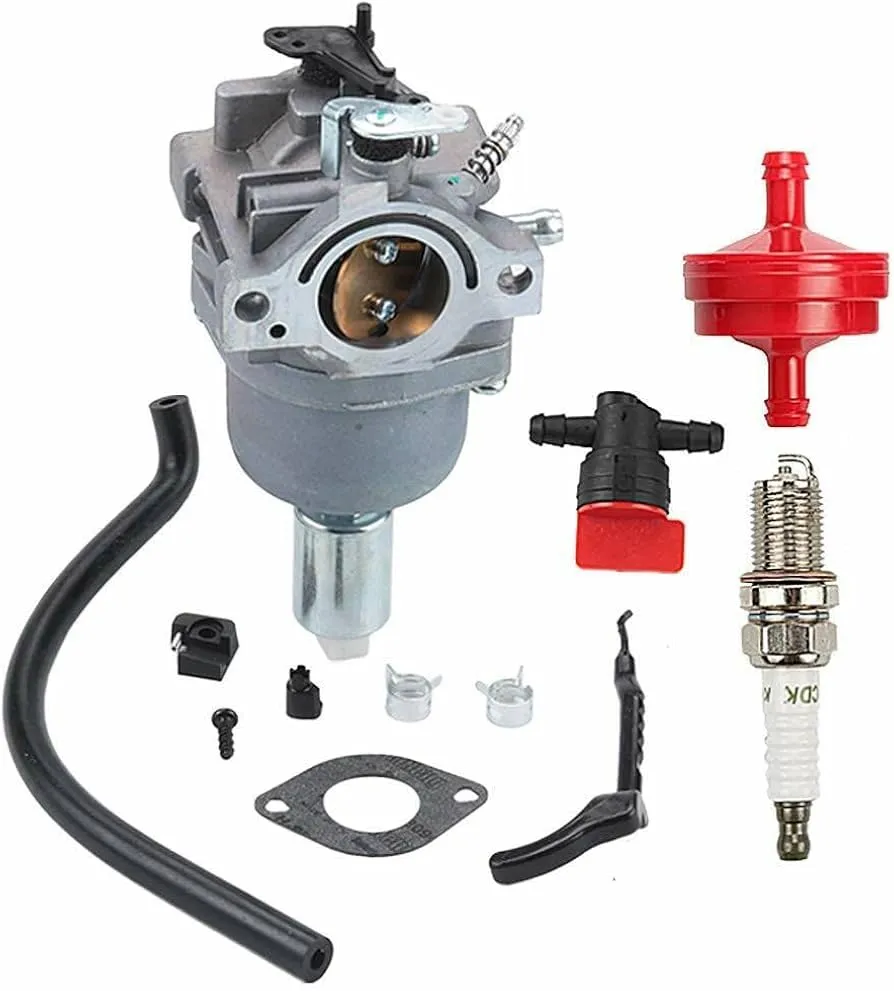
The Briggs & Stratton 791858 carburetor equips Intek single-cylinder engines from 14 to 18 horsepower. These engines power mid-size riding mowers from Craftsman, Murray, Husqvarna and others. This Nikki-type carburetor features an anti-afterfire solenoid and adjustable mixture screw.
Table of Contents
- Engine Compatibility
- Part Number Information
- Failure Symptoms
- Replacement Steps
- Cleaning and Rebuild
- Common Problems Solved
Engine Compatibility
The 791858 fits Briggs & Stratton Intek series single-cylinder OHV engines.
Horsepower Range: 14-18 HP Displacement: 344cc-500cc
Common Equipment:
- Craftsman LT1000, LT2000
- Murray Select riding mowers
- Husqvarna YTH1542XP
- Poulan Pro tractors
- MTD mid-size tractors
- Snapper rear engine riders
Engine Model Numbers:
- 28N707, 28N777
- 31C707, 31P677
- 310707, 311707
- 28B702, 28B707
[NEED REAL IMAGE: Engine ID label location on Intek single-cylinder]
Find the model number on the metal tag bolted to the engine shroud or stamped directly on the blower housing.
Part Number Information
Cross-reference chart:
| Part Number | Status |
|---|---|
| 791858 | Current |
| 792358 | Supersedes to 791858 |
| 793224 | Similar - verify before ordering |
| 698620 | Older version |
Key Features of the 791858:
- Nikki carburetor design
- Anti-afterfire solenoid on bowl
- Adjustable high-speed needle
- Fixed idle circuit
- Primer system (some models)
Failure Symptoms
No Start Condition
Engine cranks but won’t fire. You’ve checked spark and compression - they’re good.
Most likely carburetor causes:
- Clogged main jet from stale fuel
- Anti-afterfire solenoid stuck closed
- Float needle stuck shut
Starts But Dies Immediately
Fires for 1-3 seconds then quits. Priming gets another brief run.
Causes:
- Partially blocked main jet
- Fuel delivery issue to bowl
- Float stuck down
Exhaust Backfire on Shutdown
Loud pop or flame from muffler when turning key off.
Cause: Failed anti-afterfire solenoid. It’s not cutting fuel when the engine stops.
Surging at All Speeds
RPM constantly fluctuates without throttle input.
Causes:
- Lean mixture from restricted fuel flow
- Air leak at carb gasket
- Governor hunting (may not be carb related)
Rich Running - Black Smoke
Excessive fuel consumption, black exhaust smoke, fouled spark plug.
Causes:
- Choke stuck partially closed
- Float needle stuck open
- Sunk or leaking float
- High-speed needle too far out
Fuel Leaking
Gasoline dripping from carburetor body.
Causes:
- Bowl gasket deterioration
- Float needle not sealing
- Cracked fuel inlet fitting
Replacement Steps
Allow 30-45 minutes for this job.
Tools Required
- Socket set (3/8” drive)
- Flathead screwdriver
- Needle-nose pliers
- 10mm wrench
- Shop rags
- Drain pan
Procedure
1. Disconnect the spark plug wire
Pull the boot off the plug. Secure it away from the plug.
2. Disconnect battery (riding mower)
Negative terminal first. Prevents accidental starting.
3. Locate and photograph linkages
The throttle and governor linkages connect to the carburetor. Take clear photos before touching anything.
[NEED REAL IMAGE: Linkage connections on 791858 carburetor]
4. Close fuel valve
Turn the valve under the tank to OFF. No valve? Clamp the fuel line.
5. Remove air filter assembly
Usually 1-2 wing nuts. Set aside filter and housing.
6. Disconnect fuel line
Pull from carb inlet. Have rag ready for spillage.
7. Disconnect solenoid wire
Single connector on the anti-afterfire solenoid.
8. Remove throttle and governor linkages
Unhook rods and springs from carburetor lever holes. Note exact positions.
9. Remove mounting nuts
Two nuts on studs hold carb to intake. Support carb while removing second nut.
10. Pull carburetor off studs
Note gasket position and orientation.
11. Install new carburetor
New gasket first, then carb. Hand-start nuts to avoid cross-threading.
12. Reconnect everything in reverse order
Match your photos exactly for linkage positions.
13. Open fuel, check for leaks
Watch the bowl and fuel line connection.
14. Reconnect battery and test
Should start within a few cranks with proper priming.
Cleaning and Rebuild
Rebuild kits run $12-20 and include critical wear parts.
Kit Contents
- Bowl gasket
- Float needle and seat
- Mixture screw o-ring
- Fiber washers
- Inlet fitting gasket
Disassembly Steps
1. Remove bowl
Four screws on bottom. Catch the fuel.
2. Remove solenoid
Unscrew from bowl area. Inspect plunger for damage.
3. Remove float assembly
Push hinge pin out. Lift float with attached needle.
4. Remove main jet
Flathead screwdriver. Center of carb body. Note: jet is calibrated - don’t substitute different size.
5. Remove high-speed mixture screw
Count and record turns before removal. Usually 1-1.5 turns out from seated.
Cleaning Process
Soak all metal parts in carburetor cleaner for 1+ hours. Heavy varnish needs overnight soaking.
Clear every passage with compressed air. The idle circuit has tiny holes that clog easily.
Inspect the needle tip - should be smooth, not grooved or hardened.
Check float condition - shake for internal fuel (means punctured).
Reassembly
Install all new gaskets from the kit. Set mixture screw to your recorded position or 1.25 turns out as baseline.
Common Problems Solved
Problem: Engine Dies Under Load
Diagnosis: Main jet partially clogged or fuel flow restricted
Solution:
- Remove and clean main jet
- Blow out main fuel passage
- Check fuel filter and tank vent
- Verify fuel pump output (if equipped)
Problem: Backfire Through Carb When Starting
Diagnosis: Usually not carb related - suspect intake valve issue
What to check:
- Valve clearance (intake should be .003-.005”)
- Valve seat condition
- Cam lobe wear
Problem: Can’t Get Consistent Idle
Diagnosis: Idle circuit restriction or air leak
Solution:
- Clean idle passages with spray carb cleaner
- Replace carb-to-intake gasket
- Check for intake manifold cracks
Problem: Floods Constantly
Diagnosis: Float needle not sealing
Solution:
- Check for debris on needle seat
- Replace needle and seat
- Verify float isn’t sunk or stuck
- Check fuel pressure (shouldn’t exceed 4 PSI)
Problem: Solenoid Clicks But Engine Still Backfires
Diagnosis: Solenoid not fully seating or passage still open
Solution:
- Remove solenoid and verify plunger movement is full
- Clean the passage the solenoid blocks
- Replace solenoid if plunger is worn
Adjustment Specifications
High-speed mixture screw: Start at 1.25 turns out from lightly seated. Fine tune for best performance under load.
Governor static adjustment:
- Loosen clamp on governor arm
- Rotate governor shaft fully clockwise
- Hold throttle wide open
- Tighten clamp
- Check no-load RPM: 3300-3600 typical
Valve clearance (for complete tune):
- Intake: .003-.005”
- Exhaust: .005-.007”
Buying Options
Genuine Briggs 791858: $55-75 Aftermarket: $20-35
Aftermarket carbs vary in quality. Inspect before installing:
- Check solenoid threads match
- Verify float moves freely
- Confirm linkage holes align
For mowers worth maintaining long-term, genuine parts provide better reliability.
Frequently Asked Questions
Can I eliminate the anti-afterfire solenoid?
You can plug the hole and run without it, but you’ll get backfiring on shutdown. The solenoid prevents unburned fuel from igniting in the hot muffler.
My mixture screw has no effect. Why?
The mixture screw affects high-speed operation. At idle, the fixed idle circuit dominates. If you have idle issues, the problem is in the idle circuit, not the mixture screw.
How do I know if my carb is rebuildable vs needs replacement?
Replace if: corrosion inside, worn throttle shaft (wobbles), cracked body, multiple failed rebuild attempts. Rebuild if: just gummed up from old fuel, float needle worn.
Intek single-cylinder carburetors are straightforward once you understand the solenoid system. Document your linkages before disassembly and you’ll save yourself headaches during reassembly.